Be Independent

Perspective is often gained by changing the place you sit. It is easy to get lost in our daily hustle, thinking ourselves the center of the world. But if you take the time to stare at the stars or watch the sunrise, you find yourself part of a much more expansive and extravagant universe.

Perspective allows us to see things from someone else’s point of view. Too often we allow ourselves to believe the echo chambers our news sources have created for us. This has given us a false sense of certainty in the correctness of our opinions and created a phantom enemy, our political opponents.

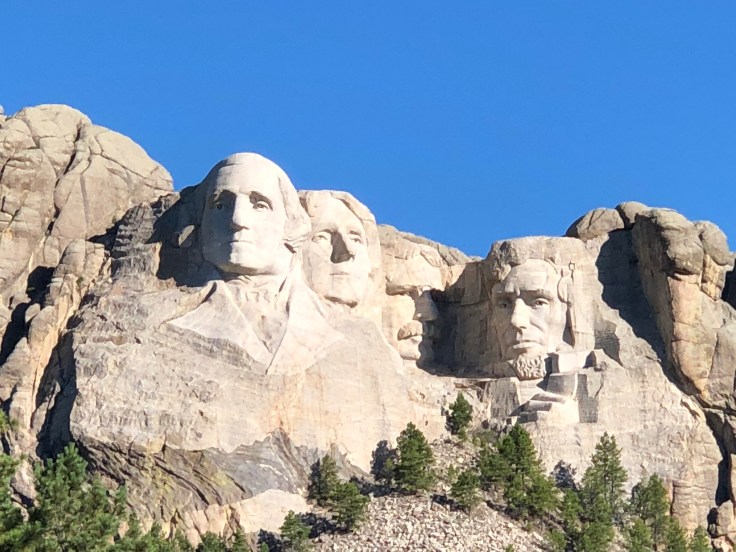
242 years ago, a group of comparatively ordinary citizens signed a document that declared, “We hold these truths to be self-evident, that all men are created equal, that they are endowed by their Creator with certain unalienable Rights, that among these are Life, Liberty and the pursuit of Happiness.” And thus, the American Dream was born.

The American Dream is constructed upon individual freedom, the ability for a person to hold their own beliefs, choose their own profession, and travel freely from place to place. It is also constructed upon a deep sense of community, the knowledge that living with purpose calls us to care for each other, that two are better than one and a cord of three strands is not easily broken.

Unraveling the spirit of America has been an unfortunate consequence of seemingly noble desires held by short sighted men. Although some will make attempts to convince you otherwise, individual freedom and collective action are mutually beneficial, not mutually exclusive, ideals. The man with the most freedom is free even of his own wants, and has his spirit set on right action. His freedom leads him to a higher purpose, which is to aid others in their pursuit of freedom.

Such freedom is rarely found, and to often we lose perspective of our principles by focusing on specific actions. Some call for our country to be made great again. Others say it was never great. Both may have valid points, but their proposed remedies do not uphold the values set forth by American philosophy. We have made enemies of one another, which is by no means a feat of greatness.

The enemy of individual freedom and collective action is the centralization of power. Since America’s inception, it has fought empires, tyrants and dictators. We have constructed internal systems attempting to diminish the ability of any official to obtain too much authority. We have broken apart monopolies to ensure a single capitalist could not wield too much influence.

The central thesis of both political parties is a perversion of the American Dream, because both ignore half of the Dream itself. My Republican friends will tell you that individual freedom is paramount and too much power has been centralized in the government. They are right. My Democratic friends will tell you that collective action is paramount and too much power is centralized in corporations. They are also right.

What neither party will admit is that too much power has been centralized in the political parties themselves. Democrats are not a good countervailing force to Republicans, because their massive influence undermines an individual’s freedom to solve a collective action problem. The political parties have defined who can play the political game, what you have to believe and who you should associate with. All of this is the antithesis of the free thinking that wrote the Declaration of Independence, that fought a war to abolish slavery, that overcame a depression to stop fascism, that continued fighting for equal rights and continues on the path to a better life for so many today.

So on Independence Day, it is my hope that you would be truly independent, that you think freely and deeply. We need to expunge the thoughts regurgitated to us about who we should fear and remember that our neighbors fundamentally desire the same things we do. We need the perspective to understand that individual freedom can work in tandem with collective action, and the harmony between free thought and right living has always been interconnected.

America’s greatness does not lie in the strength of its weapons or the size of its wallet. America’s greatness lies in the spirit of its people. But don’t take my word for it.

Be independent.

Think for yourself.

Find your own perspective.
Finding Leadership

Can humanity reach its fullest potential without inspiring leadership? Are title, rank, and formalized power necessary to lead us from where we are to where we need to be? What are the characteristics, criteria and credentials that make a person a leader? If history is any indication of future events, we should expect the most exhilarating leadership to come not from formal authority bestowed upon economic or political elites, but through personal power derived from within, many times induced from people of the lowliest circumstances.

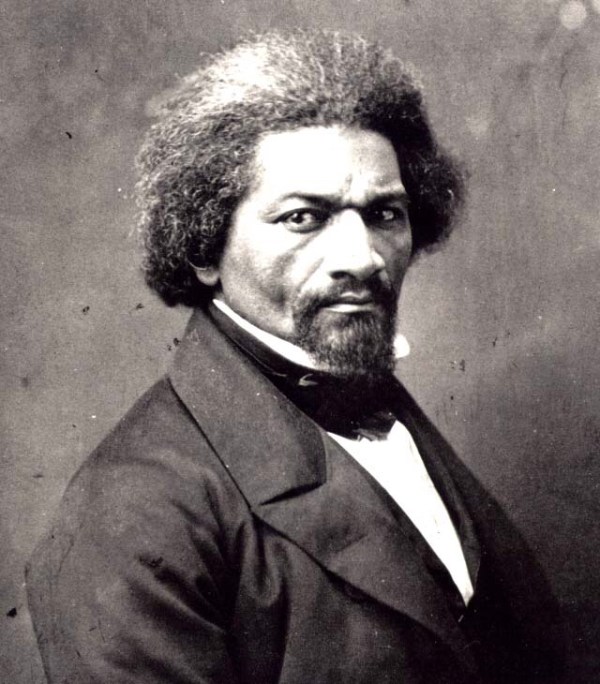
In 1838, a man travelled from Baltimore to New York, and after a short time, settled in New Bedford, Massachusetts. He had imagined life in north to be significantly inferior to that in the south, due to the affluence created by the institution of slavery. To his surprise, it was a flourishing town, where both laborers and merchant class workers shared in the wealth created by industry and trade. He acquired gainful employment and started a family with his newlywed wife. He went on to write an autobiography of his life in the sweltering plantations of south, the moral masquerade in the city of Baltimore and his admirable journey to the north.

The Narrative of Frederick Douglass became one of the most influential writings of the 19th century, and was a spark to a fire that ended the institution of slavery. Douglass could have lived a quiet life in New Bedford, where although racism was not absent, it was minimal compared to abhorrent conditions he had known in the fields of Maryland. But Douglass remembered his brethren still trapped in bondage and was compelled to act on their behalf. Still a slave in 1845, he published his famous work, which propelled him to the forefront of abolitionist thought leadership.

But before Douglass became a leader of the abolitionist movement, he became the leader of his own destiny. He resolved to satisfy his insatiable yearning to breathe free. He taught himself to read and developed a skilled trade. He developed a plan, and executed it in the face of over-whelming odds with life-threating risks.

Through his story, we can see the first step to leadership is self-leadership. If you cannot successfully lead yourself, leading others will not be possible. Secondly, we can see the evidence of thought leadership. The first step in advancing society is to believe in a future that is brighter than the current reality. The words we speak and the thoughts we believe become the lives we lead in the future. And third, we can see how the resolve of an ordinary person, even from the lowliest of circumstances, through their dreams, words and diligence can change the fate of the world.

Douglass’ story of extraordinary resolve is only one example of how everyday people influence the outcomes of our lives. Before institutions are changed, before laws are passed, even before society changes its mind, a thought leader emerges who changes the course of history.

In the absence of quality leadership from our politicians, religious figures, and business people, we must be resolved to develop our own self-leadership. Deciding to lead yourself on a course of self-improvement is the first step to living your life to its fullest potential. If we lead ourselves individually in this manner, we will undoubtedly advance society collectively.

We need the thought leadership which will break the deficiencies of the status quo to move us toward a more perfect union. We need thought leaders who speak truth in the face of opposition, even in the face of the majority, because the thoughts that change the world are rarely those originally held by popular opinion. We need to listen to those who are speaking the truth of our times, with a vision for the future founded upon the knowledge of the past. We need to actively seek out our own errors, and refine our own positions, to draw closer to the evasive, omnipresent truth which brings harmony to our lives.

The world will be no better than the best its leaders can offer. A compelling vision of the future, combined with a sober judgment of our current state is required to move humanity forward. Both true leaders and demagogues have assumed positions of formal authority in the past and present, but those with formal authority have not always, or even usually, produced the most progress. It is the common person arising above their station, who leads in thought and example, which creates the most leadership known to the world.

The leader the world needs to find right now is you, in whatever capacity you’re in, to achieve your fullest, and by example, lead those around you to do the same.

The question remains, where are you going to lead us?

Photo courtesy of PBS.

http://www.pbs.org/wgbh/aia/part4/4h2962.html

Reconciliation – The reason I started a blog

My first professional job was for a small business that had a unique product for a niche market. Quality was exceptional, it’s function and design exceeded expectations and it was distributed via a number of outlets. The owners were motivated innovators and customers loved the product.

But there was a problem. They had been without a bookkeeper for several months and, with all the other tasks needed to run a business, accounting slipped by the wayside. Accounts were in dire need of reconciliation, which is what landed me the job. To this day, it is still the most challenging financial reconciliation I’ve completed and I’m deeply grateful for the opportunity, as getting through the reconciliation forced me to learn a number of problem solving skills I did not posses when I began.

Much like my first accounting job, our world is in dire need of reconciliation and we are all in need of developing the skills needed to bring peace to our world and our relationships. It seems each day is a new barrage of divisiveness and vitriol published in print, broadcast across our airwaves and beamed directly from satellites into the palm of our hands. Polarization is creating echo-chambers, where we only listen to opinions that we agree with. Most of the time, we ignore opposing points of view, not only because we don’t agree with them, but also because arguments are often presented in a manner that is disrespectful, or worse yet, downright hateful.

We most often think of this divisiveness in terms of politics, but I would argue it also expresses itself in our religion, our family life, even in our personal thoughts and feelings. The word reconciliation is defined as “the restoration of friendly relations” and “the action of making one view or belief compatible with another”. Indeed, we are in need of reconciliation. Our world is in need of reconciliation, both personnaly and societally.

And so, I’ve decided to start a blog that discusses ways we can be reconciled. My aim is to take seemingly in compatible ideas and, through a synthesis of various subjects, demonstrate that some mutually exclusive ideas aren’t so exclusive if we are willing to clean the lenses through which we view the world. I will attempt to resolve paradoxes through changing paradigms, or at least offering a unique perspective. This blog will cover a variety of topics, which reflects the broad interests I have. From politics and economics, to philosophy and religion, to science and psychology, I hope to give you a fresh look at some ancient debates and principles.

As part of the process of reconciliation, not only must both sides of the ledger must be brought into balance, but errors must also be corrected, omissions must be brought to light and items that don’t belong must be removed. To reconcile ourselves to each other, we must share our opinions, the reasons we hold them, and be willing to engage in civil discourse related to our beliefs and assumptions. To this end, some content may reflect issues that I feel have errors that need corrected or omissions that need brought to light.

At a minimum, I hope you will walk away from reading these posts with a broader perspective on why others who disagree with you may not be completely in error, but rather, may perceive some things that you have yet to witness. Perhaps you will gain some new tools to engage with people of differing points of view. At best, maybe you’ll walk away inspired to be reconciled with your brother, your neighbor, or perhaps even your enemy.
post

Blog at WordPress.com.

Up ↑