Becoming a Joyful Warrior for Justice

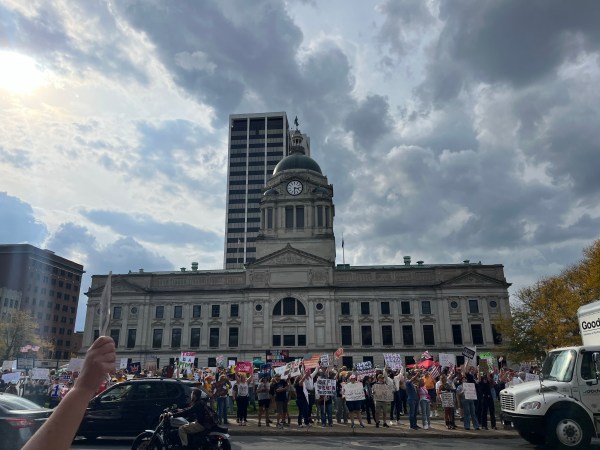
The recent events in Minnesota, and the death of Alex Pretti, stopped me in my tracks. They didn’t just make me angry or afraid—they made me tired. And then, unexpectedly, they reminded me why joy matters so much in this fight.

The past nine years have been exhausting.

Since the first campaign of Donald Trump, we have lived in a near-constant state of political stress. We watched an unconstitutional Muslim ban get rolled out with cruelty and chaos. We endured repeated attempts to repeal the Affordable Care Act with no viable replacement. We saw tax cuts pushed through that overwhelmingly favored the wealthy, sold as prosperity for everyone else. Those first three years were draining—but the guardrails of our institutions largely held. Courts intervened. Civil servants slowed the worst impulses. Democracy bent, but it did not break.

Then COVID hit.

What followed was not just a public health crisis, but a full exposure of incompetence at the highest levels of government. Science was dismissed. Responsibility was deflected. The economy collapsed. Unemployment skyrocketed. Millions lost loved ones, jobs, and any sense of stability. The cost of that failure is still with us.

When Democrats regained control, they did what functional governance looks like. Employment rebounded to pre-pandemic levels. Child poverty was driven to its lowest point since the 1960s. There was genuine compassion shown toward Latin American refugees fleeing political violence. But compassion without structure is not enough. Immigration was not handled in an organized, humane, and orderly way, leaving the border overwhelmed and communities unprepared. Inflation, too, was not contained quickly enough. For many families, that pain was immediate and personal.

Above all else, that economic anxiety is what opened the door to Donald Trump’s return.

Many people want to go back to what they remember as the “economic success” of Trump’s first three years, without realizing that much of that stability was built on policies inherited from the Obama administration. Now, the guardrails are gone. Trump has already shown he is willing to attempt to violently overturn an election. He governs through chaos, wedge issues, and fear—keeping his supporters angry and his opponents perpetually disoriented.

Fear is his fuel.

But we have something he does not.

We have joy.

Joy does not mean denial. It does not mean pretending things aren’t bad or refusing to feel righteous anger. Anger can spark a movement—but it cannot sustain one. Joy is what allows us to wake up each day and keep going without becoming what we oppose. Joy is what reminds us that we are fighting for something, not just against someone.

We fight for dignity. For equality. For a society that does not require cruelty to function.

We do not need fear to motivate us every day. We need to lean into the unity and strength we find in one another—more than the disdain we understandably feel toward the dismal actions of Trump and his fascist goons. We can choose to be joyful warriors for justice, grounded in the knowledge that we are part of a much longer story.

This was the first time in a long time, or maybe ever, that I woke up ready to take on the injustices of the moment. I was ready to calmly deal with the noise, the chaos, the false beliefs and the disingenuousness. I started to believe that I can do this every day, for as long as it takes, because this is what those who came before me did as well.

The arc of history is long, but it bends toward justice—because people bend it.

When we show up joyfully to do our small part each day, we become an unstoppable force for good. We become harder to exhaust, harder to divide, harder to silence. Joy is not weakness; it is endurance. It is clarity. It is power.

So hear this: you are not alone.

Together, we shall overcome. Together, we will not give in.

May there be a joyful light within you that shines so brightly it ignites the hearts of those around you—spreading a fire of joy, love, hope, and unity across this country.

Why The Truth About Immigration Feels So Urgent Right Now

I picked up The Truth About Immigration by Zeke Hernandez because I was tired of feeling like every conversation about immigration was taking place in bad faith. No matter where you fall politically, the debate has become less about understanding reality and more about reinforcing fears. Reading this book, I felt something I hadn’t felt in a while on this topic: relief. Not because the issue is simple, but because Hernandez treats the reader like an adult—someone capable of holding facts, nuance, and complexity at the same time.

That feeling has stayed with me as I’ve watched the current situation in Minneapolis unfold. What stands out isn’t just the tension or the anger—it’s how quickly misinformation fills the vacuum. Immigration is once again pulled into the narrative, often without evidence, used as a shorthand explanation for economic stress, crime, or social instability. Hernandez’s book makes clear how predictable this pattern is—and how dangerous.

One of the book’s greatest strengths is how concretely it documents the positive contributions of immigrants, moving far beyond vague claims that they are “good for the economy.” Hernandez walks through the data carefully and repeatedly shows how immigrants strengthen societies in ways that are both measurable and deeply human.

For example, he highlights how immigrants are disproportionately likely to start businesses. These aren’t just tech unicorns or headline-grabbing startups, but the small and midsize firms that anchor local economies—restaurants, construction companies, logistics firms, care services. These businesses create jobs, expand local tax bases, and often revitalize neighborhoods that native-born populations have left behind.

Hernandez also digs into innovation. Immigrants are overrepresented among patent holders, engineers, scientists, and founders in high-growth sectors. The book makes a compelling case that immigration is not a drag on advanced economies but one of the engines that keeps them dynamic. Countries that shut themselves off don’t protect prosperity; they slowly suffocate it.

Another myth Hernandez dismantles is the idea that immigrants are a fiscal burden. He shows how, over time, immigrants contribute more in taxes than they consume in public services—especially when you account for the fact that many arrive in their prime working years, educated at someone else’s expense. They help stabilize aging societies, support pension systems, and fill critical labor gaps in healthcare, agriculture, and skilled trades.

Perhaps most striking is the section on crime, an area where misinformation does the most damage. Hernandez doesn’t hedge here: the evidence consistently shows that immigrants, including undocumented immigrants, commit crimes at lower rates than native-born citizens. Yet fear-driven narratives persist because they are emotionally powerful and politically useful.

This is where the book moves from economics into something more unsettling. Hernandez explains how economic anxiety and unconscious bias make populations vulnerable to manipulation. When people feel insecure—about wages, housing, or cultural change—it becomes easier for authoritarian figures to redirect that fear toward immigrants. Falsehoods become tools. Facts become threats. Division becomes a strategy for asserting power.

Reading this, it’s hard not to see the parallels in our own moment. When unrest surfaces, when institutions feel fragile, when people are hurting, misinformation spreads faster than truth. Immigration becomes a convenient distraction from deeper structural problems—ones that are harder to solve and less useful to exploit.

What The Truth About Immigration ultimately offers is not just information, but a model for how we should be talking about difficult issues. Hernandez doesn’t moralize or scold. He presents evidence, explains why our intuitions often mislead us, and trusts readers to draw responsible conclusions. In a society saturated with hot takes and outrage, that approach feels almost radical.

This book made me realize how starved we are for factual grounding. We cannot solve problems we refuse to understand. We cannot preserve a democratic society if we allow fear and falsehoods to define our debates. At a time when misinformation can inflame cities and empower authoritarians, The Truth About Immigration is not just a book I’d recommend—it’s one I think we need.

Blog at WordPress.com.

Up ↑