Where do we go from here?

I started this blog eight years ago after the first election of Donald Trump. It was (and is) an introspective reflection of what I aspire to be and the good I see in the world. The lead up to the 2016 election was filled with vitriol and hate. My first blog post was about how we need reconciliation as a country. It pains me to say we find ourselves in an even deeper hole eight years later. 

After Trump’s first election, I took a step back. I could not wrap my head around why conservative Christians would elect a person who so blatantly disregards the principles they stand for. I took a deep dive into meta-cognition, asking myself: how do I know what I know? I read the classics, from Plato and Aristotle to Descartes and Kant. I researched psychology from William James to Martin Seligman to Philip Zambardo. I studied history from Caesar, to Lincoln, to George Marshall. Along with readings in business, economics and leadership, I have read over 400 books since Trump’s first election. 

Below are the timeless takeaways I have found:

  1. In our hearts, people deeply desire to love and be loved. To do good and be good. To connect and be connected.
  2. People fear losses more than they appreciate gains. The fear of loss is the most powerful motivator and is genesis of hate between people.
  3. Individuals take logical actions based on their frame of reference. The clearer your frame is, the better outcome you will receive. 
  4. There is more information available than any individual’s ability to understand it. Thus, we all have incomplete frames of reference. 
  5. Individuals, communities, and nations prosper when they collaborate with their neighbors. 
  6. The suffering of individuals, the failing of communities, and the collapse of nations is not caused by the presence of enemies. It is caused by the apathy of friends.
  7. The arc of history bends toward justice. We are living in better times today than at any point in history. 
  8. There are powerful forces working to misinform you because they are afraid of losing their own power. 

I find these takeaways to be most relevant, because I truly believe we need to re-ground ourselves in fundamental truths before we can address the current state of global and national geopolitics. Our problems are rooted in the tension created by the above truths. However, I believe the majority of Americans believe in a better future and are willing to work toward it. We want a better form of leadership. 

I also believe their is overwhelming agreement on the below principles, even if their is disagreement upon the policy solution:

  1. Working middle class people have been left behind by globalism. Although the total economy has expanded, the majority of the benefit has gone to the elite. 
  2. The two party system has been corrupted by finances and is not serving average Americans. Politicians have to spend too much time raising money and not enough time solving problems. 
  3. Concentration of power in the Federal government and mega-corporations is an inherent problem, because it concentrates power in the hands of very few people. As noted, no one has a perfect frame of reference, so concentrated power will ALWAYS result in distorted outcomes. 
  4. We believe in both individual freedom AND collective action. We want laws that work and are enforced. We want leaders who inspire us to build better communities. 
  5. We are terrified by the path we have been headed down for the past eight years. It seems that no matter who is in office, the problems we face are amplified rather than resolved. 

I am writing these things because I need to bring back the best version of myself. The person who believes we can work together for a brighter future. Make no mistake, I remain and will remain a staunch opponent of Donald Trump, and any follower of his who uses fear mongering to divide us. But I remain open to any conservative idea that reflects love, peace, rationality and prosperity. 

I believe it is incumbent upon you and me, the average citizens of America, to discard the divisiveness currently defining American politics. We need to throw out the labels of Republican and Democrat. We need to tune out Fox News and MSNBC. We need to turn off our phones and head to the library. We need to talk to our neighbors with the intent to understand their struggle, not to convince them of our own righteousness. 

I will admit, it has been difficult to maintain a positive outlook recently, for personal, professional and political reasons. At times, I have not showed up as the person I aspire to be. And yet, alert and healthy natures realize that the sun rose clear. It is never too late to give up our prejudices. 

In the coming weeks, months and years, I hope to continue sharing with you, both to gain understanding of our world and to inspire myself and others in becoming the people we aspire to be, to build the communities we want to live in and to continue writing a uniquely human story, where good people stand together in the face of adversity to create a better world for us all. 

The World is Less Volatile Than Ever Before

Last week, I attended the Securities Industry Institute hosted by the University of Pennsylvania. The faculty and speakers were outstanding. The week was filled with thought provoking content about the current and future state of business and financial services. A recurring theme was the need for strategic agility and adaptability in a rapidly changing environment. The term VUCA (volatility, uncertainty, complexity and ambiguity) was consistently called out as a challenge to modern leaders. In fact, today’s business executives believe decision making is harder now than it was thirty years ago.

While I am in full agreement that adaptability is critical for success, I am a wholehearted skeptic that today’s world is more volatile than it has been before. Recency bias and a lack of historical perspective may be clouding our view of what life was like thirty, one hundred, or one thousand years ago. In an era often characterized by rapid change and uncertainty, it is essential to recognize the significant strides humanity has made towards stability and peace. Despite ongoing challenges, the world today is less volatile than at any other point in history. We need to recognize how far we have come so that we can continue the journey through our ambiguous and complex times.

An Accurate Perspective Requires Broad Historical Context

Let’s take a look at some current events which lead us to believe we live in exceptionally volatile times.

COVID vs Pre-Modern Pandemics

The COVID-19 pandemic disrupted our lives in ways none of us previously experienced. It was a time of great ambiguity, as no one knew the appropriate course of action. Many of us lost loved ones to the virus, which is an absolute tragedy. There have been around 7 million global COVID related deaths at the time of this writing.

At the same time, this represents only 0.1% of the global population. Compare this to the Spanish flu 100 years ago, where nearly 50 million people died, or about one out of every three people. The Black Death was even more devastating, killing half of Europe in 14th and 15th centuries. And likely the most egregious case of them all, when disease caused a near complete genocide of indigenous Americans, killing nearly 95% of all inhabitants of the Americas after 1492.

COVID was a tragedy, but collective action, information sharing and modern medicine mitigated the devastating losses humanity has experienced in the past.

Russian Invasion of Ukraine

On February 24, 2022, Russia invaded the Ukraine on an unprovoked basis. It was shocking to most of us to see a modern invasion of this magnitude. There has been incredible suffering by the Ukrainian people that cannot be overlooked. The free world should stand behind Ukraine and against the oppressive rule of authoritarianism.

And yet, the current suffering of the Ukrainian people pales in comparison to the past. In the 1930’s, Joseph Stalin created a famine in the Ukraine to suppress its people, creating a genocide, known as the Holodomor, of nearly 4 million Ukrainians. Compare this against just over 10,000 civilian deaths since the most recent instance of Ukraine’s invasion. Lest we forget, the Soviet Union was an initial collaborator of the Nazi’s invasion of Poland in 1939. Compare this against the near unanimous European solidarity against Russia today, which includes the conversion of a historically neutral Sweden into a NATO ally.

The lessons learned after WWII have been applied to the war in Ukraine. While it was a surprise when war actually came, diplomatic channels had already made NATO allies aware of Putin’s intentions, and the Biden administration publicly predicted the invasion weeks before it occurred. Ukrainian resistance and international cooperation thwarted Russia’s march toward Kiev. A united front against a totalitarian can bend the arc of history toward freedom.

War in the Holy Land

The attack by Hamas on Israel on October 7, 2023 was a shocking and horrific attack. The ensuing Israeli invasion has been equally and even more disturbing. And while each war has its own unique causes and atrocities, this is the ninth war Israel has fought since it became an independent nation in 1948.

The unfortunate truth is that war in the Holy land is as normal as peace. This is a land occupied by the Assyrians, Babylonians, Hebrews, Romans, Byzantines, Arabs, Ottomans, British and Palestinians prior to the formation of modern Israel. War should always outrage us when it occurs, but this war is not a sign of the times becoming more volatile. It’s a sign volatility is part of human existence.

Gender and Racial Inequality

Recent events have highlighted the persistent and intersecting inequality women and people of color face. From George Floyd, to the Supreme Court Dobbs decision, to the ongoing border crisis, America still falls short of living up to the creeds written in the Declaration of Independence and inscribed on the Statue of Liberty.

And yet…black unemployment is at an all time low. The gender pay gap is as narrow as it ever has been. The incarceration rate has been falling over the last decade. The 118th Congress is the most diverse in history, both by gender and race. We are not yet where we need to be, but on the long march to equality, there is more road behind us than there is left to travel.

Our Progress Depends on Connection, Understanding, Democracy and Rule of Law

The ideas of the Enlightenment have created global prosperity unknown to previous generations. As leaders and individuals, we must continue to advocate for the ideas that support progress:

  1. Global Connectivity: The interconnectedness facilitated by technology and globalization has created a web of economic, social, and political ties that incentivize cooperation over conflict. Nations are more reliant on each other’s stability, fostering diplomatic efforts to resolve disputes peacefully.
  2. Diplomatic Channels: The proliferation of diplomatic channels and institutions, such as the United Nations and regional organizations, provides platforms for dialogue and conflict resolution. Diplomatic efforts have prevented many potential conflicts from escalating into full-scale wars.
  3. Democratization: The spread of democracy around the world has led to more accountable and responsive governance structures. Democratically elected leaders are often constrained by institutions and public opinion, reducing the likelihood of authoritarian abuses and internal strife.
  4. International Law and Norms: The establishment and enforcement of international laws and norms have created a framework for resolving disputes and holding aggressors accountable. Treaties and conventions on issues like human rights and armed conflict provide a common standard for behavior.
  5. Economic Interdependence: The deepening economic ties between nations have created mutual interests in maintaining stability and avoiding conflict. War disrupts trade and investment, making it an unattractive option for most countries.
  6. Advancements in Conflict Resolution: Innovations in conflict resolution techniques, such as mediation, arbitration, and peacekeeping operations, have been instrumental in preventing and resolving conflicts. These mechanisms provide non-violent alternatives for addressing grievances.
  7. Technological Advancements: Technological advancements have improved communication, surveillance, and military capabilities, making it easier to detect and deter potential threats. Additionally, technological innovations in agriculture, healthcare, and infrastructure have lifted millions out of poverty, reducing social instability.
  8. Global Governance Initiatives: Collaborative initiatives to address global challenges, such as climate change, pandemics, and terrorism, demonstrate the willingness of nations to work together for the common good. Multilateral agreements and partnerships strengthen collective security and resilience.
  9. Cultural Exchange and Understanding: Increased cultural exchange and understanding have fostered empathy and tolerance among diverse communities. People are more inclined to resolve differences peacefully when they recognize shared humanity and common aspirations.
  10. Youth Empowerment and Education: Greater access to education and opportunities for young people empower them to participate in shaping their societies positively. Educated and engaged youth are less susceptible to extremist ideologies and more likely to advocate for peace and progress.

These concepts have created and will continue to develop a prosperous world, as long as we stay committed to listening to each other and standing up for progress.

Perhaps the greatest threat to our current state are demagogues who manipulate facts to obscure reality for their own benefit.

We are Supremely Capable of Facing the Obstacles in Front of Us

I do not mean to minimize the challenges we face today as individuals, leaders, organizations or as a society. The threat of disruption is real. We have a long bridge to build to reduce national and international political divisiveness. The wars in Ukraine and Gaza are appalling. Global warming threatens to change the face of the planet. America is still not the land of opportunity and equality it aspires to be. We cannot ignore the challenges we face and we must recognize our ability to overcome them.

We must acknowledge how far we have come so we can take courage, hope and inspiration from the people who have faced and defeated even greater obstacles than these in the past. We have more tools at our disposal, more people we can call on for assistance, more resources we can deploy and more love we can share.

There are forces that actively seek to make you afraid for the purpose of preserving old power dynamics that no longer serve us. We need to proactively counter this narrative with the voices of all the prophets, sages, stoics and activists who came before, and who through their words and actions delivered this message:

Do not be afraid. Boldly take action toward improving yourself, your situation, your organization and your community. Do not be overcome by fear, but overcome evil with good. The world is changed through the small actions individuals take. Plant trees under which whose shade you will never sit under. Build a community whose results you may never reap the rewards of. Lift up the people around you, because the highest calling we have is to care for the people we live with.

These are the actions of a life well lived. I hope you live it to the fullest.

Ethos: Keeping Your Integrity in a Complex World

In a world often clouded by ambiguity and moral dilemmas, the concepts of ethos and character are perhaps the most overlooked traits in our personal and professional lives. We talk about efficiency and effectiveness. We focus on results. We track to do lists and pack our calendars. But how much time do we spend defining, developing and living by our values?

Derived from the Greek word meaning “character,” ethos refers to the credibility and trustworthiness a person possesses, encompassing the moral and ethical qualities that define who you are. It forms the bedrock upon which you and your organization build your reputations. At its core, ethos represents the credibility and authority you command through your actions and words. It is the embodiment of honesty and reliability that instills confidence in others. When you possess a strong ethos, you are seen as credible and authentic, making yourself influential and persuasive in your interactions.

This credibility is earned through consistency, transparency, and adherence to moral principles, which serve as guiding lights in decision-making and behavior. Character is not merely about adhering to societal norms or rules but about embodying fundamental values and principles that transcend situational contexts. It is the inner moral strength that withstands temptations, challenges, and adversities, remaining steadfast in the pursuit of what is right and just.

In today’s society, where ethical lapses and moral compromises often dominate headlines, the importance of ethos and character cannot be overstated. They serve as antidotes to the erosion of trust and integrity, providing yourself and your team with moral clarity and direction in a world fraught with ethical dilemmas. Leaders who embody strong ethos and character inspire trust, loyalty, and confidence among their followers. Their words are imbued with sincerity, their actions guided by principles, and their decisions rooted in ethical considerations. Such leaders not only foster a culture of integrity within their organizations but also set a positive example for others to emulate.

Moreover, ethos and character play pivotal roles in shaping your relationships, both personal and professional. In personal relationships, individuals with strong ethos and character are seen as dependable, empathetic, and genuine partners. Their integrity and moral rectitude form the foundation of trust and mutual respect, fostering healthy and fulfilling connections. In the professional sphere, colleagues and collaborators are drawn to those who exhibit unwavering ethics and character, recognizing them as reliable and principled allies in the pursuit of shared goals.

However, maintaining ethos and character is not without its challenges. In a world rife with moral ambiguity and ethical dilemmas, you will often find yourself confronted with situations that test your integrity and moral fortitude. The allure of short-term gains or the pressure to conform to societal and corporate expectations will tempt you to compromise your principles. It is precisely in these moments of moral crisis that the true measure of your ethos and character is revealed. It is a test of resilience, courage, and conviction to stay true to your values and principles, even in the face of adversity.

Integrity and authenticity are increasingly scarce commodities. Organizational leaders spend time attempting to lay out corporate mission statements and values, but these are completely meaningless if we do not live by them day-to-day. Buzzwords like “well-being”, “work life balance”, and “mindfulness” have become everyday vocabulary because so many feel unwell, unbalanced, and distracted. At it’s root, this is caused by a lack of psychological safety based on trusting relationships. We cannot build and maintain trusting relationships without personal character and ethos.

I fundamentally believe that the majority of our societal and organizational problems stem from a lack of ethos. We don’t trust each other, and therefore, we cannot perform together at the highest level. We have good reason not to trust each other, because so many of us have compromised our own character for a short term gain. We have been pushed aside by our leaders for the sake of expedient profits. This is not the path of sustainable growth or competitive advantage.

If you’ve made it this far in this rant, I challenge you to do two things:

  1. Define your personal values
  2. Create an accountability loop to ensure you live by them

Knowing your values to their core and a daily pursuit to live by them will ground your personal character on a solid foundation that does not sway when challenges arise.

Ethos and character are the moral compass that guide us through life. If we compromise these values, we compromise who we are as individuals. By living and leading with high standards and an up-right ethos, we build the trust that develops psychological safety. This leads to deeper relationships, more effective teams, and long term success. As with any positive change, the first person to start with is always myself. I’m committed to doing better at holding fast to timeless principles and striving to be a beacon of integrity and honesty. I hope you will do the same.

Courageous Leadership: Giving Voice to the Unpopular Truth

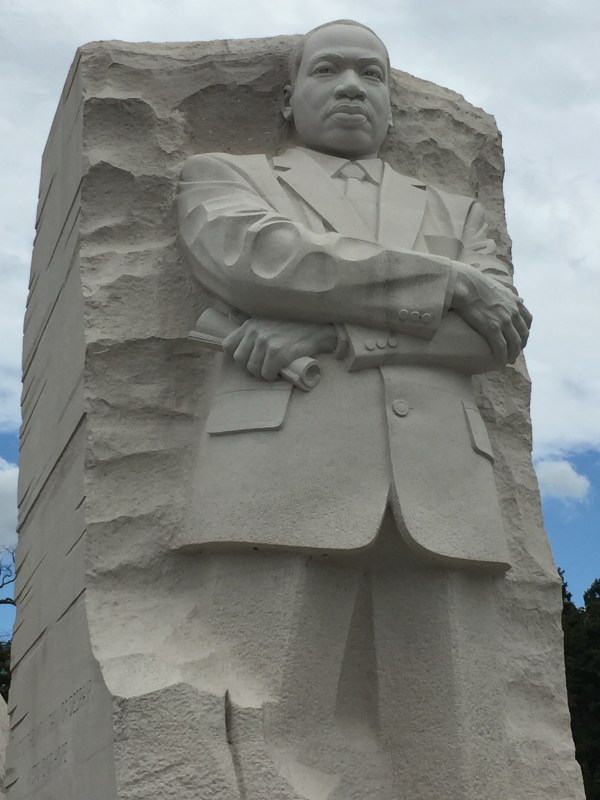
Today is Martin Luther King Day, a day celebrating a giant of a leader, who in retrospect is viewed as one of the greatest Americans who ever lived. Children are taught in school about his “I Have a Dream” speech, where people will be judged not by the color of their skin, but by the content of their character. What we don’t talk about is that most Americans disapproved of Dr. King at the time of his death. We popularize his dream, but ignore the societal criticisms in his “Letter from a Birmingham Jail”.

“I must confess that over the past few years I have been gravely disappointed with the white moderate.” – Dr. Martin Luther King Jr.

It is probable Dr. King would still be disappointed in the white moderate today. In fact, I am concerned he would be disappointed in all moderates who continue to allow injustice to flourish through inaction and silence. Many people are willing to make noise in safe places and behind computer screens, but few are willing to makes waves within their own sphere of influence.

There exists a delicate dance around difficult truths – the kind that elicit discomfort, challenge the status quo, and often remain unspoken. People tend to shy away from uttering these truths, whether out of fear of confrontation, a desire to maintain harmony, or simply to shield themselves from potential backlash. This avoidance, however, has consequences not only on an individual level, but also permeates into the fabric of societies and organizations.

The Anatomy of Avoidance

One primary reason people sidestep difficult truths is the fear of conflict. The human psyche tends to gravitate towards comfort and stability, making the prospect of unsettling conversations unappealing. Unpopular truths often disrupt established norms, challenge ingrained beliefs and force individuals to confront uncomfortable realities.

Moreover, the fear of social repercussions plays a significant role in this avoidance. People fear being ostracized, criticized, or even facing professional consequences for voicing opinions that deviate from the mainstream. This fear-driven silence creates a culture where superficial agreement takes precedence over authentic discourse.

The Ripple Effect on Societal Dynamics

When we collectively avoid difficult truths, our society is left grappling with unaddressed issues. Societal norms and systemic problems persist because genuine conversations about them are stifled. This reluctance to confront uncomfortable truths can lead to the perpetuation of inequality, injustice, and other deep-seated issues. This is the state we find ourselves in today.

In the absence of open dialogue about difficult truths, our society risks stagnation. Progress becomes elusive as challenges remain unacknowledged and unaddressed. The collective unwillingness to confront reality hampers societal growth and evolution. Indeed, it has been decades since we have achieved anything that amounts to real progress. We need more open conversation and direct action.

The Organizational Impact

In the organizational sphere, the consequences of avoiding difficult truths are equally profound. Teams and companies that discourage open communication about challenges or failures foster a culture of silence. This silence impedes innovation, problem-solving, and ultimately inhibits the organization’s ability to adapt to changing circumstances.

Employees who fear reprisals for highlighting inconvenient truths may disengage or become passive participants in the workplace. This stifles creativity and hampers the organization’s ability to navigate complex challenges. In contrast, organizations that encourage transparent communication, even when it involves uncomfortable truths, create an environment conducive to growth and improvement. The only path to sustainable success lies in confronting the difficult truth about your business.

The Courageous Leadership Paradigm

Enter the courageous leader – the catalyst for change in a landscape dominated by evasion. Leaders who possess the courage to articulate difficult and unpopular truths exhibit a rare but indispensable quality. Such leaders are not driven solely by the pursuit of popularity or short-term gains; instead, they prioritize the long-term health and success of their communities and organizations.

Courageous leaders understand that short-term discomfort is a small price to pay for the long-term benefit of transparency and growth. They recognize that avoiding difficult truths may offer temporary relief, but comes at the cost of perpetuating systemic issues and hindering progress.

Benefits of Courageous Leadership

1. Building Trust: Leaders who openly address difficult truths build trust within their teams or communities. Transparency fosters an environment where individuals feel heard and respected, creating a foundation for collaboration and innovation.

2. Encouraging Innovation: Acknowledging uncomfortable realities is the first step towards finding innovative solutions. Courageous leaders create a culture that values creativity and problem-solving, unencumbered by the fear of reprisals.

3. Adaptability: Organizations led by individuals willing to confront difficult truths are inherently more adaptable. They can respond effectively to challenges, navigate change, and steer the course toward long-term success.

4. Crisis Management: In times of crisis, leaders who embrace difficult truths can provide clear, honest communication. This transparency is crucial for guiding teams through challenging circumstances and maintaining confidence in leadership.

5. Catalyzing Cultural Change: Courageous leaders have the power to transform organizational cultures. By normalizing open conversations about difficult truths, they set the stage for positive cultural shifts that endure over time.

Courageous Leadership Requires Our Direct Action

Dr. King’s Letter has one primary premise: The time for action is now. We must directly confront the challenges we face with courage. The reluctance to voice difficult truths is a pervasive challenge in our individual lives and broader societal contexts. However, the benefit of being a leader who embraces these truths far outweighs the discomfort of the moment. Courageous leadership, marked by a willingness to confront unpopular realities, is the linchpin for fostering trust, promoting innovation, and steering communities and organizations toward a resilient and sustainable future.

Perhaps the most provocative part about difficult truths is to whom they need addressed. It is not a difficult truth when a Republican lectures a Democrat about the size of government. A difficult truth is a critique of your own social group and your own way of life. It’s a truth that will get you in trouble because no one wants to hear it. It’s criticizing the supporters who can get you out of jail while you are unjustly sitting in a cell.

Existentially, the most difficult truths to confront are the lies we tell ourselves. It’s confronting your own bias. It’s researching the truths told by the other side of the political aisle. It’s acknowledging your business decisions do not meet your ethical standards. Maybe we all need to reflect deeply on the content of our own character.

The world is in desperate need of courageous leadership. We need to tell each other the hard truths that are getting in the way. Maybe we need the silence of a Birmingham jail cell to have a moment of clarity. Or maybe we can follow in the footsteps of the giants who came before us that paved the way.

I am thankful for the courageous leadership of Dr. King.

What is one courageous action you can take that speaks truth into a world increasingly filled with falsehood?

Five Effective Actions to Lead through Uncertainty

Several weeks ago, it was announced the division I work for will be acquired by another firm. I wrote several weeks ago about how maintaining realistic optimism throughout the process is key to moving forward for all involved. However, mindset alone is insufficient for a successful transition. Execution is needed to ensure our clients and employees are taken care of.

This is exceptionally challenging given the uncertainty and ambiguity our teams are experiencing. Execution requires definitive plans and engaged teams. But how can we as leaders provide the clarity needed to foster an effective working environment?

Taking these five actions below provide the best path to navigate through ambiguous and uncertain times.

1. Define Success

In ambiguous situations, decisions often need to be made with incomplete information. In spite of this, effective leadership rapidly moves to define what success will look like in a future state. This is the starting point to navigating through uncertainty.

Strong leaders employ strategic decision-making processes that involve gathering available data, consulting relevant stakeholders, and weighing risks. Emphasize calculated risks while being ready to adjust strategies based on evolving circumstances.

2. Communicate Known and Unknowns

Clear and transparent communication is paramount during uncertain times. Although all the desired information will not be available, leaders often have more concrete information than they realize. Ensuring the team is aware of what is known, what is unknown, and when to expect further definition brings as much clarity as possible into an opaque situation. Simple items such as timelines for future communications, project plans and governance structures allow employees to see that progress is being made.

Keeping the team informed about the situation, potential challenges, and any available information fosters trust and unity. Admit there are a lot of unanswered questions and that it’s ok to be uneasy about it. Embrace honesty, acknowledge uncertainties, and encourage open dialogue to ensure everyone is aligned and on the same page.

3. Engage with Your Team Personally

The best communication happens in a one-on-one setting. People will share more openly about their concerns and questions when asked directly in private. This feedback is invaluable for leaders to effectively gauge individual and team moral. Remember to continue to provide transparent communication and be prepared to answer difficult questions. Be optimistic about the future, but ensure your team members are able to freely express their thoughts, especially if they are not feeling the optimism as deeply as you are. Accept their thoughts without refuting them, as uncertainty can often come with downsides that should not be overlooked.

4. Provide Empathy and Support

During times of uncertainty, emotions can run high. While we want to emphasize the potential benefits of change, we also need to acknowledge the drawbacks and issues faced by our teams. Leaders need to demonstrate empathy and offer support to their team members. Be conscious of the challenges they might be facing, actively listen to their concerns, and provide avenues for support. It is also a time to recognize your peers and superiors are also going through challenging times. They are people too, so when you feel you have the capacity, reach out and provide empathy in all directions.

5. Cultivate Resilience

Building resilience within the team is crucial for navigating ambiguity. Encourage a growth mindset, emphasize learning from failures, and celebrate small wins. Fostering resilience helps individuals and the team as a whole bounce back stronger in the face of uncertainty. Methods to improve resilience focus on the personalization, permanence and pervasiveness of the perceived challenges according resilience theory. Ensuring the team views challenges as temporary and localized problems narrows the focus and allows team members to see problems as solvable.

Execution is Critical

Uncertain and ambiguous situations create incredibly difficult times for leaders. By defining success, communicating knowns and unknowns, connecting individually, providing empathy and cultivating resilience, leaders enable their teams to move forward through precarious times. Embracing these actions can foster an environment conducive to growth, innovation, and solidarity. Remember, while uncertainty may be daunting, it also presents opportunities for development and transformation when approached with the right mindset and actions.

I look forward to the uncertain opportunities that lie ahead of us.

A legend in leadership

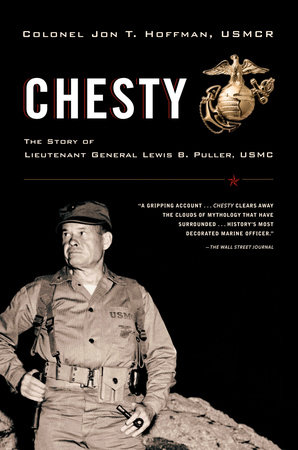
Some leaders in history are greater than fiction. Lieutenant General Lewis “Chesty” Puller is one of those examples. Widely considered the greatest U.S. Marine in history, Chesty’s career spanned four decades over which he accumulated five Navy Crosses. His life is biographied by Colonel Jon Hoffman in the work “Chesty: the story of Lieutenant General Lewis B. Puller”.

On first appearance, Chesty was the “Marine’s Marine”. A gruff voiced, profane warfighter who led from the front. He frequently determined how much courage a leader had by the casualty counts, and boasted that his officers had higher casualty ratios than his enlisted men. His Virginian ancestry gave him a love of Confederate tales and both he and those around him had a tendency to aggrandize the stories of his own careers as he progressed in age. Nevertheless, the historical records of his leadership under fire need no embellishment. Winning skirmishes in Haiti and Nicaragua in his younger years, then on to the legendary battles of Guadalcanal in World War II and the Chosin Reservoir in Korea, Chesty’s reputation was well deserved.

But his legendary leadership was more than a blood and guts desire for military conquest and glory. Chesty had exemplary conduct of how to lead his troops, on and off the battlefield. He was known for treating everyone with the same amount of respect, from the lowest enlisted man to the commanding general. He had unwritten rules for the officers under his command, requiring them to eat last in the chow line and ensuring they were ready to perform any task they asked their men to. He was a superb trainer, and on multiple occasions led the training elements that prepared Marines for the future battles the country would face. Beneath the image Chesty displayed to the world was a man who cared deeply about the people around him and who held everyone accountable for their actions, particularly those in authority.

Chesty’s example reminds me that leadership is a complex task. To lead myself and others effectively, I must look the part of the role, but also be present with the people I lead. I have to set high expectations and then show my team how to accomplish the mission. I have to work beside them through their efforts to accomplish our collective goals. Moreover, I need to set increasingly higher levels of achievement and accountability for my senior team members, as they are responsible for assisting me in creating a culture of accountability. Most importantly, I must care deeply about the people I lead and the mission we are trying to accomplish. People are capable of surmounting seemingly impossible feats when inspired by the presence of a leader who is fully invested in them and fully committed to the task at hand, as Chesty Puller demonstrated throughout his career.

Chesty by Jon T. Hoffman

Finding Leadership

Can humanity reach its fullest potential without inspiring leadership? Are title, rank, and formalized power necessary to lead us from where we are to where we need to be? What are the characteristics, criteria and credentials that make a person a leader? If history is any indication of future events, we should expect the most exhilarating leadership to come not from formal authority bestowed upon economic or political elites, but through personal power derived from within, many times induced from people of the lowliest circumstances.

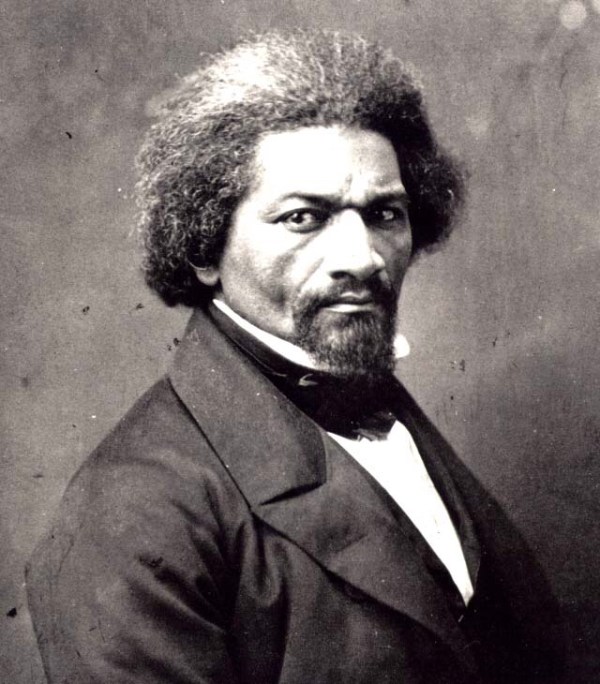
In 1838, a man travelled from Baltimore to New York, and after a short time, settled in New Bedford, Massachusetts. He had imagined life in north to be significantly inferior to that in the south, due to the affluence created by the institution of slavery. To his surprise, it was a flourishing town, where both laborers and merchant class workers shared in the wealth created by industry and trade. He acquired gainful employment and started a family with his newlywed wife. He went on to write an autobiography of his life in the sweltering plantations of south, the moral masquerade in the city of Baltimore and his admirable journey to the north.

The Narrative of Frederick Douglass became one of the most influential writings of the 19th century, and was a spark to a fire that ended the institution of slavery. Douglass could have lived a quiet life in New Bedford, where although racism was not absent, it was minimal compared to abhorrent conditions he had known in the fields of Maryland. But Douglass remembered his brethren still trapped in bondage and was compelled to act on their behalf. Still a slave in 1845, he published his famous work, which propelled him to the forefront of abolitionist thought leadership.

But before Douglass became a leader of the abolitionist movement, he became the leader of his own destiny. He resolved to satisfy his insatiable yearning to breathe free. He taught himself to read and developed a skilled trade. He developed a plan, and executed it in the face of over-whelming odds with life-threating risks.

Through his story, we can see the first step to leadership is self-leadership. If you cannot successfully lead yourself, leading others will not be possible. Secondly, we can see the evidence of thought leadership. The first step in advancing society is to believe in a future that is brighter than the current reality. The words we speak and the thoughts we believe become the lives we lead in the future. And third, we can see how the resolve of an ordinary person, even from the lowliest of circumstances, through their dreams, words and diligence can change the fate of the world.

Douglass’ story of extraordinary resolve is only one example of how everyday people influence the outcomes of our lives. Before institutions are changed, before laws are passed, even before society changes its mind, a thought leader emerges who changes the course of history.

In the absence of quality leadership from our politicians, religious figures, and business people, we must be resolved to develop our own self-leadership. Deciding to lead yourself on a course of self-improvement is the first step to living your life to its fullest potential. If we lead ourselves individually in this manner, we will undoubtedly advance society collectively.

We need the thought leadership which will break the deficiencies of the status quo to move us toward a more perfect union. We need thought leaders who speak truth in the face of opposition, even in the face of the majority, because the thoughts that change the world are rarely those originally held by popular opinion. We need to listen to those who are speaking the truth of our times, with a vision for the future founded upon the knowledge of the past. We need to actively seek out our own errors, and refine our own positions, to draw closer to the evasive, omnipresent truth which brings harmony to our lives.

The world will be no better than the best its leaders can offer. A compelling vision of the future, combined with a sober judgment of our current state is required to move humanity forward. Both true leaders and demagogues have assumed positions of formal authority in the past and present, but those with formal authority have not always, or even usually, produced the most progress. It is the common person arising above their station, who leads in thought and example, which creates the most leadership known to the world.

The leader the world needs to find right now is you, in whatever capacity you’re in, to achieve your fullest, and by example, lead those around you to do the same.

The question remains, where are you going to lead us?

Photo courtesy of PBS.

http://www.pbs.org/wgbh/aia/part4/4h2962.html

Blog at WordPress.com.

Up ↑