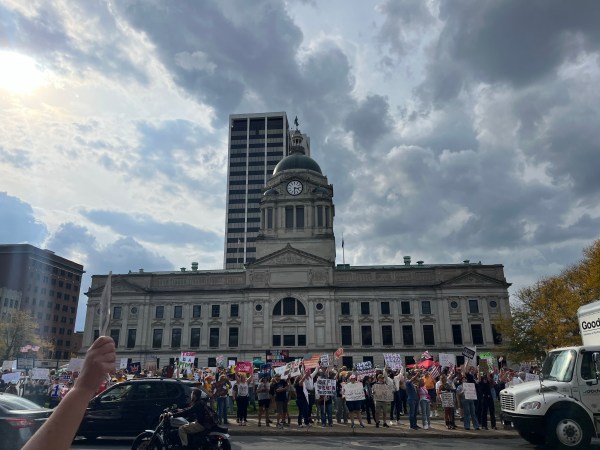
The recent events in Minnesota, and the death of Alex Pretti, stopped me in my tracks. They didn’t just make me angry or afraid—they made me tired. And then, unexpectedly, they reminded me why joy matters so much in this fight.
The past nine years have been exhausting.
Since the first campaign of Donald Trump, we have lived in a near-constant state of political stress. We watched an unconstitutional Muslim ban get rolled out with cruelty and chaos. We endured repeated attempts to repeal the Affordable Care Act with no viable replacement. We saw tax cuts pushed through that overwhelmingly favored the wealthy, sold as prosperity for everyone else. Those first three years were draining—but the guardrails of our institutions largely held. Courts intervened. Civil servants slowed the worst impulses. Democracy bent, but it did not break.
Then COVID hit.
What followed was not just a public health crisis, but a full exposure of incompetence at the highest levels of government. Science was dismissed. Responsibility was deflected. The economy collapsed. Unemployment skyrocketed. Millions lost loved ones, jobs, and any sense of stability. The cost of that failure is still with us.
When Democrats regained control, they did what functional governance looks like. Employment rebounded to pre-pandemic levels. Child poverty was driven to its lowest point since the 1960s. There was genuine compassion shown toward Latin American refugees fleeing political violence. But compassion without structure is not enough. Immigration was not handled in an organized, humane, and orderly way, leaving the border overwhelmed and communities unprepared. Inflation, too, was not contained quickly enough. For many families, that pain was immediate and personal.
Above all else, that economic anxiety is what opened the door to Donald Trump’s return.
Many people want to go back to what they remember as the “economic success” of Trump’s first three years, without realizing that much of that stability was built on policies inherited from the Obama administration. Now, the guardrails are gone. Trump has already shown he is willing to attempt to violently overturn an election. He governs through chaos, wedge issues, and fear—keeping his supporters angry and his opponents perpetually disoriented.
Fear is his fuel.
But we have something he does not.
We have joy.
Joy does not mean denial. It does not mean pretending things aren’t bad or refusing to feel righteous anger. Anger can spark a movement—but it cannot sustain one. Joy is what allows us to wake up each day and keep going without becoming what we oppose. Joy is what reminds us that we are fighting for something, not just against someone.
We fight for dignity. For equality. For a society that does not require cruelty to function.
We do not need fear to motivate us every day. We need to lean into the unity and strength we find in one another—more than the disdain we understandably feel toward the dismal actions of Trump and his fascist goons. We can choose to be joyful warriors for justice, grounded in the knowledge that we are part of a much longer story.
This was the first time in a long time, or maybe ever, that I woke up ready to take on the injustices of the moment. I was ready to calmly deal with the noise, the chaos, the false beliefs and the disingenuousness. I started to believe that I can do this every day, for as long as it takes, because this is what those who came before me did as well.
The arc of history is long, but it bends toward justice—because people bend it.
When we show up joyfully to do our small part each day, we become an unstoppable force for good. We become harder to exhaust, harder to divide, harder to silence. Joy is not weakness; it is endurance. It is clarity. It is power.
So hear this: you are not alone.
Together, we shall overcome. Together, we will not give in.
May there be a joyful light within you that shines so brightly it ignites the hearts of those around you—spreading a fire of joy, love, hope, and unity across this country.


 Travis Buell