Ethos: Keeping Your Integrity in a Complex World

In a world often clouded by ambiguity and moral dilemmas, the concepts of ethos and character are perhaps the most overlooked traits in our personal and professional lives. We talk about efficiency and effectiveness. We focus on results. We track to do lists and pack our calendars. But how much time do we spend defining, developing and living by our values?

Derived from the Greek word meaning “character,” ethos refers to the credibility and trustworthiness a person possesses, encompassing the moral and ethical qualities that define who you are. It forms the bedrock upon which you and your organization build your reputations. At its core, ethos represents the credibility and authority you command through your actions and words. It is the embodiment of honesty and reliability that instills confidence in others. When you possess a strong ethos, you are seen as credible and authentic, making yourself influential and persuasive in your interactions.

This credibility is earned through consistency, transparency, and adherence to moral principles, which serve as guiding lights in decision-making and behavior. Character is not merely about adhering to societal norms or rules but about embodying fundamental values and principles that transcend situational contexts. It is the inner moral strength that withstands temptations, challenges, and adversities, remaining steadfast in the pursuit of what is right and just.

In today’s society, where ethical lapses and moral compromises often dominate headlines, the importance of ethos and character cannot be overstated. They serve as antidotes to the erosion of trust and integrity, providing yourself and your team with moral clarity and direction in a world fraught with ethical dilemmas. Leaders who embody strong ethos and character inspire trust, loyalty, and confidence among their followers. Their words are imbued with sincerity, their actions guided by principles, and their decisions rooted in ethical considerations. Such leaders not only foster a culture of integrity within their organizations but also set a positive example for others to emulate.

Moreover, ethos and character play pivotal roles in shaping your relationships, both personal and professional. In personal relationships, individuals with strong ethos and character are seen as dependable, empathetic, and genuine partners. Their integrity and moral rectitude form the foundation of trust and mutual respect, fostering healthy and fulfilling connections. In the professional sphere, colleagues and collaborators are drawn to those who exhibit unwavering ethics and character, recognizing them as reliable and principled allies in the pursuit of shared goals.

However, maintaining ethos and character is not without its challenges. In a world rife with moral ambiguity and ethical dilemmas, you will often find yourself confronted with situations that test your integrity and moral fortitude. The allure of short-term gains or the pressure to conform to societal and corporate expectations will tempt you to compromise your principles. It is precisely in these moments of moral crisis that the true measure of your ethos and character is revealed. It is a test of resilience, courage, and conviction to stay true to your values and principles, even in the face of adversity.

Integrity and authenticity are increasingly scarce commodities. Organizational leaders spend time attempting to lay out corporate mission statements and values, but these are completely meaningless if we do not live by them day-to-day. Buzzwords like “well-being”, “work life balance”, and “mindfulness” have become everyday vocabulary because so many feel unwell, unbalanced, and distracted. At it’s root, this is caused by a lack of psychological safety based on trusting relationships. We cannot build and maintain trusting relationships without personal character and ethos.

I fundamentally believe that the majority of our societal and organizational problems stem from a lack of ethos. We don’t trust each other, and therefore, we cannot perform together at the highest level. We have good reason not to trust each other, because so many of us have compromised our own character for a short term gain. We have been pushed aside by our leaders for the sake of expedient profits. This is not the path of sustainable growth or competitive advantage.

If you’ve made it this far in this rant, I challenge you to do two things:

  1. Define your personal values
  2. Create an accountability loop to ensure you live by them

Knowing your values to their core and a daily pursuit to live by them will ground your personal character on a solid foundation that does not sway when challenges arise.

Ethos and character are the moral compass that guide us through life. If we compromise these values, we compromise who we are as individuals. By living and leading with high standards and an up-right ethos, we build the trust that develops psychological safety. This leads to deeper relationships, more effective teams, and long term success. As with any positive change, the first person to start with is always myself. I’m committed to doing better at holding fast to timeless principles and striving to be a beacon of integrity and honesty. I hope you will do the same.
Courageous Leadership: Giving Voice to the Unpopular Truth

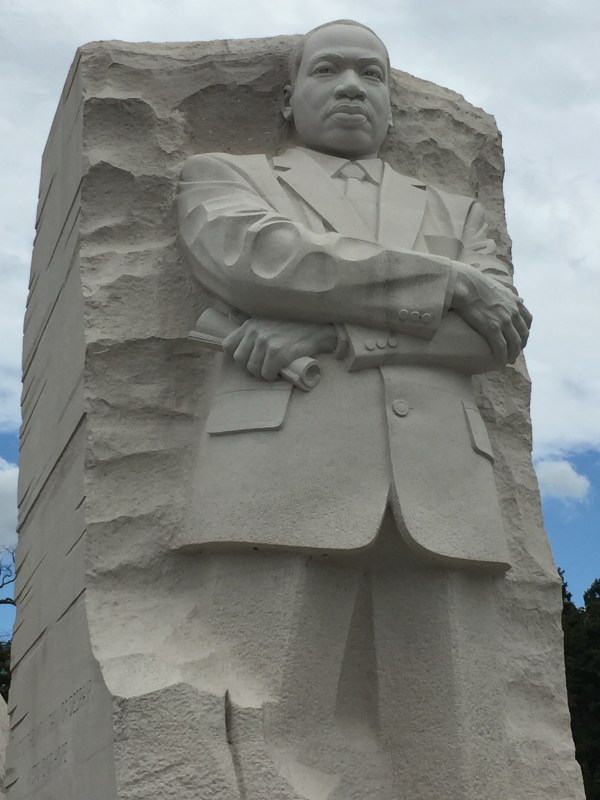
Today is Martin Luther King Day, a day celebrating a giant of a leader, who in retrospect is viewed as one of the greatest Americans who ever lived. Children are taught in school about his “I Have a Dream” speech, where people will be judged not by the color of their skin, but by the content of their character. What we don’t talk about is that most Americans disapproved of Dr. King at the time of his death. We popularize his dream, but ignore the societal criticisms in his “Letter from a Birmingham Jail”.

“I must confess that over the past few years I have been gravely disappointed with the white moderate.” – Dr. Martin Luther King Jr.

It is probable Dr. King would still be disappointed in the white moderate today. In fact, I am concerned he would be disappointed in all moderates who continue to allow injustice to flourish through inaction and silence. Many people are willing to make noise in safe places and behind computer screens, but few are willing to makes waves within their own sphere of influence.

There exists a delicate dance around difficult truths – the kind that elicit discomfort, challenge the status quo, and often remain unspoken. People tend to shy away from uttering these truths, whether out of fear of confrontation, a desire to maintain harmony, or simply to shield themselves from potential backlash. This avoidance, however, has consequences not only on an individual level, but also permeates into the fabric of societies and organizations.

The Anatomy of Avoidance

One primary reason people sidestep difficult truths is the fear of conflict. The human psyche tends to gravitate towards comfort and stability, making the prospect of unsettling conversations unappealing. Unpopular truths often disrupt established norms, challenge ingrained beliefs and force individuals to confront uncomfortable realities.

Moreover, the fear of social repercussions plays a significant role in this avoidance. People fear being ostracized, criticized, or even facing professional consequences for voicing opinions that deviate from the mainstream. This fear-driven silence creates a culture where superficial agreement takes precedence over authentic discourse.

The Ripple Effect on Societal Dynamics

When we collectively avoid difficult truths, our society is left grappling with unaddressed issues. Societal norms and systemic problems persist because genuine conversations about them are stifled. This reluctance to confront uncomfortable truths can lead to the perpetuation of inequality, injustice, and other deep-seated issues. This is the state we find ourselves in today.

In the absence of open dialogue about difficult truths, our society risks stagnation. Progress becomes elusive as challenges remain unacknowledged and unaddressed. The collective unwillingness to confront reality hampers societal growth and evolution. Indeed, it has been decades since we have achieved anything that amounts to real progress. We need more open conversation and direct action.

The Organizational Impact

In the organizational sphere, the consequences of avoiding difficult truths are equally profound. Teams and companies that discourage open communication about challenges or failures foster a culture of silence. This silence impedes innovation, problem-solving, and ultimately inhibits the organization’s ability to adapt to changing circumstances.

Employees who fear reprisals for highlighting inconvenient truths may disengage or become passive participants in the workplace. This stifles creativity and hampers the organization’s ability to navigate complex challenges. In contrast, organizations that encourage transparent communication, even when it involves uncomfortable truths, create an environment conducive to growth and improvement. The only path to sustainable success lies in confronting the difficult truth about your business.

The Courageous Leadership Paradigm

Enter the courageous leader – the catalyst for change in a landscape dominated by evasion. Leaders who possess the courage to articulate difficult and unpopular truths exhibit a rare but indispensable quality. Such leaders are not driven solely by the pursuit of popularity or short-term gains; instead, they prioritize the long-term health and success of their communities and organizations.

Courageous leaders understand that short-term discomfort is a small price to pay for the long-term benefit of transparency and growth. They recognize that avoiding difficult truths may offer temporary relief, but comes at the cost of perpetuating systemic issues and hindering progress.

Benefits of Courageous Leadership

1. Building Trust: Leaders who openly address difficult truths build trust within their teams or communities. Transparency fosters an environment where individuals feel heard and respected, creating a foundation for collaboration and innovation.

2. Encouraging Innovation: Acknowledging uncomfortable realities is the first step towards finding innovative solutions. Courageous leaders create a culture that values creativity and problem-solving, unencumbered by the fear of reprisals.

3. Adaptability: Organizations led by individuals willing to confront difficult truths are inherently more adaptable. They can respond effectively to challenges, navigate change, and steer the course toward long-term success.

4. Crisis Management: In times of crisis, leaders who embrace difficult truths can provide clear, honest communication. This transparency is crucial for guiding teams through challenging circumstances and maintaining confidence in leadership.

5. Catalyzing Cultural Change: Courageous leaders have the power to transform organizational cultures. By normalizing open conversations about difficult truths, they set the stage for positive cultural shifts that endure over time.

Courageous Leadership Requires Our Direct Action

Dr. King’s Letter has one primary premise: The time for action is now. We must directly confront the challenges we face with courage. The reluctance to voice difficult truths is a pervasive challenge in our individual lives and broader societal contexts. However, the benefit of being a leader who embraces these truths far outweighs the discomfort of the moment. Courageous leadership, marked by a willingness to confront unpopular realities, is the linchpin for fostering trust, promoting innovation, and steering communities and organizations toward a resilient and sustainable future.

Perhaps the most provocative part about difficult truths is to whom they need addressed. It is not a difficult truth when a Republican lectures a Democrat about the size of government. A difficult truth is a critique of your own social group and your own way of life. It’s a truth that will get you in trouble because no one wants to hear it. It’s criticizing the supporters who can get you out of jail while you are unjustly sitting in a cell.

Existentially, the most difficult truths to confront are the lies we tell ourselves. It’s confronting your own bias. It’s researching the truths told by the other side of the political aisle. It’s acknowledging your business decisions do not meet your ethical standards. Maybe we all need to reflect deeply on the content of our own character.

The world is in desperate need of courageous leadership. We need to tell each other the hard truths that are getting in the way. Maybe we need the silence of a Birmingham jail cell to have a moment of clarity. Or maybe we can follow in the footsteps of the giants who came before us that paved the way.

I am thankful for the courageous leadership of Dr. King.

What is one courageous action you can take that speaks truth into a world increasingly filled with falsehood?

Character, Virtue and Spirituality

Aristotle described virtue as the mean between two extremes, but today, we live in an age where the two extremes are just increasingly mean. We have inflicted retribution upon one another, taking an eye for an eye so many times that most of us walk around blind. The ancient philosophers and mystics warned against the perils we face, but we heed their advice no more than the contemporary masses of their own times. We are a people who have fooled ourselves into believing we can have leadership without character, righteousness without virtue, and peace without spirituality.

We need look no farther than last year’s election to prove the foremost. Perpetual dishonesty, habitual marital infidelity, underhanded business practices and cash exchanges with foreign officials are the antithesis of qualities to be sought in a leader. In describing this list, you cannot determine if I am referring to the candidate who won or lost. In some absurd series of unfortunate circumstances, the electorate decided it best to vote for the lesser evil. But the lesser of evils is still evil, and thus, a conscious decision was made to vote in support of evil. 

The foundation of leadership is the ability to lead oneself. Said otherwise, character is the bedrock upon which leadership is built. When we’re looking for a leader, we should look first for those qualities that make for an upright individual. We should look for character strengths like honesty, humility and perspective. It makes no difference what policies a governor supports if their personal qualities lead the people into a state of corruption and moral filth.

However, I am skeptical to believe that those in power have led to our state of corruption and am more inclined to think we ourselves are to blame. Predominantly, this is a Christian society and the church has long been the standard bearer for morality in America. Today’s Christian community wants to claim the righteousness of Jesus Christ, but chooses to live with the virtues of Mel Gibson. 

Mainline denominations are in discord trying to appease opposing points of view and, meanwhile, relegate preaching the Gospel to a secondary status. The non-denominational and evangelical movement gravitates toward a narrow view that claims to take the Bible literally, but upon examination, takes literally only those parts that are convenient for its culturally homogeneous constituents, and performs theological gymnastics anytime a scripture is opposed to the constituency’s prejudice. 

This has created a moral void in our society. It is unclear how virtue ethics can regain footing in a time where the primary religion is already certain of its own righteousness, while those on the outside see the church for what it has let itself become. 

On the other hand, there is a growing number of us who are religiously unaffiliated. Many of these individuals seek a world peace based on rationality and science. They see those who are vocally religious and rightly identify the hypocrisy of their actions. Paradoxically, these people are equally as intolerant of religion in the same way they claim the religious to be intolerant. Nietzsche is the greatest philosopher who claimed God is dead, but he also went mad from his own internal disharmony. 

There is no peace without spirituality. All of the science, knowledge and rationality obtained throughout human history cannot replace the intrinsic, unspeakable peace that is only found through the introspective realizations brought about by the Spirit. If you acquire all the knowledge of the world, but are out of touch with your soul, you will be unable to achieve the peace that rationality tells you is possible. 

We have a problem. We lack character, virtue and spirituality. We need leadership that reflects these qualities. We need to work harder to cultivate these qualities within ourselves. And yet, I remain optimistic about the human condition. For all the troubles we face, there are those among us who have the answers, and if we quiet ourselves long enough to listen to them, I am confident we will continue to progress as a people. 

At the intersection of character, virtue and spirituality lies an inner peace that cannot be taken from you. If you have taken the time to read this to the end, then I am confident that you are person who values strong character, moral virtues and deep spirituality. If so, then I challenge you to look at your own thoughts and actions, and find the places where you can develop your character, expand your virtues and connect with your spirit. One by one, we can become the change we wish to see. 

Blog at WordPress.com.

Up ↑