A legend in leadership

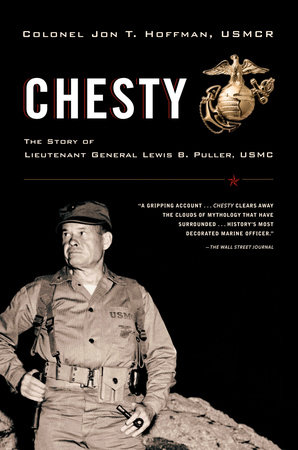
Some leaders in history are greater than fiction. Lieutenant General Lewis “Chesty” Puller is one of those examples. Widely considered the greatest U.S. Marine in history, Chesty’s career spanned four decades over which he accumulated five Navy Crosses. His life is biographied by Colonel Jon Hoffman in the work “Chesty: the story of Lieutenant General Lewis B. Puller”.

On first appearance, Chesty was the “Marine’s Marine”. A gruff voiced, profane warfighter who led from the front. He frequently determined how much courage a leader had by the casualty counts, and boasted that his officers had higher casualty ratios than his enlisted men. His Virginian ancestry gave him a love of Confederate tales and both he and those around him had a tendency to aggrandize the stories of his own careers as he progressed in age. Nevertheless, the historical records of his leadership under fire need no embellishment. Winning skirmishes in Haiti and Nicaragua in his younger years, then on to the legendary battles of Guadalcanal in World War II and the Chosin Reservoir in Korea, Chesty’s reputation was well deserved.

But his legendary leadership was more than a blood and guts desire for military conquest and glory. Chesty had exemplary conduct of how to lead his troops, on and off the battlefield. He was known for treating everyone with the same amount of respect, from the lowest enlisted man to the commanding general. He had unwritten rules for the officers under his command, requiring them to eat last in the chow line and ensuring they were ready to perform any task they asked their men to. He was a superb trainer, and on multiple occasions led the training elements that prepared Marines for the future battles the country would face. Beneath the image Chesty displayed to the world was a man who cared deeply about the people around him and who held everyone accountable for their actions, particularly those in authority.

Chesty’s example reminds me that leadership is a complex task. To lead myself and others effectively, I must look the part of the role, but also be present with the people I lead. I have to set high expectations and then show my team how to accomplish the mission. I have to work beside them through their efforts to accomplish our collective goals. Moreover, I need to set increasingly higher levels of achievement and accountability for my senior team members, as they are responsible for assisting me in creating a culture of accountability. Most importantly, I must care deeply about the people I lead and the mission we are trying to accomplish. People are capable of surmounting seemingly impossible feats when inspired by the presence of a leader who is fully invested in them and fully committed to the task at hand, as Chesty Puller demonstrated throughout his career.

Chesty by Jon T. Hoffman

The Upside of Globalism

I recently returned from New Delhi, where I spent two weeks getting to know six new members of my team. They were all eager to take on the work, to learn, to grow, and to help the enterprise I work for succeed. The world becomes stronger when we build meaningful, lasting relationships across cultures. International business has been vilified in recent times, but history demonstrates that lasting peace and prosperity belongs to those who build partnerships that reach across the globe.

Would you believe that global poverty rates have been cut in half since the year 2000, that malaria outbreaks are being thwarted by mosquito nets, or that the literacy rate has went from 42% in 1960 to 86% in 2015? These statistics are all true, although you won’t hear about them often by tuning into the news. Globalism has been slowly increasing the welfare of humanity.

This is not to say that globalism does not have its difficulties or frustrations, but the solution to these problems is not to create a cloister of separation from the rest of the world. Doing so will inevitably leave you behind. The solution is leaning into the challenges that globalism creates, building fair trade policies, protecting the interests of workers and entrepreneurs alike and having honest conversations between citizens and governments.

There are six intelligent and enthusiastic people who work on my team halfway around the world. The opportunities they have been given due to globalism is slowly modernizing India. The same is happening in China, Africa and Latin America. The most powerful person is not often the biggest or strongest or even the smartest. The most powerful person is the one with the most friends. When we reach out and form relationships, we become more understanding, dynamic and interesting people. Global business allows us to broaden our relationships, build partnerships, and change the world for the better.

After experiencing India, I am more thankful than ever to have been born in the United States of America. I am also more confident than ever that the country I call home is stronger, more prosperous and more enlightened when it forges builds partnerships with the people beyond the artificial borders we have created. We have only one world to live on. The quality of that life depends on our ability to work together.

IMG_2990

What keeps you from excellence?

You were born to live a life full of excellence. Each person, regardless of their deficiencies and disposition, has something they can offer the world that will lead to a life of enrichment and add unique value for the rest of us to enjoy. Unfortunately, the majority of us will pass up this opportunity of personal fulfillment and outward success by failing to act on what drives us.

We look at superstars who have soared to the top ranks of their field and wish we were them. We wonder what it took for them to achieve and envy the luck they must have had to get there. But upon closer examination, it becomes apparent everyone has the capacity for greatness within them. The difference between champions and couch potatoes has little to do with talent and everything to do with grit.

Angela Duckworth, a University of Penn professor, defines grit as passion and perseverance. Passion is the starting point. If you’re going to excel, you have to love what you’re doing for the sake of itself. Whether it’s social work or sports or science, what you love to do is the starting point for where your greatness lies. Passion gives you the initial interest, but more is needed to become excellent. The grittier a person is, the more effort they put into their respective field over time. It is this persistence that turns skill into greatness. In combination, the love of an area of expertise combined with continued intentional practice is what creates human excellence (For more on this, read Grit: The power of passion and perseverance, Duckworth, 2016).

Passion is the spark. Persistence is the fire. Excellence lights up the world.

But too many of us trifle our time away either believing we’re not capable or wasting our lives doing things we’re not passionate about. “I can’t” is the biggest lie you’ve ever told yourself.

There are two types of this doubt. This first is saying “I can’t” when you truly believe it. Of course, there are strict physical limitations where “I can’t” may be true, but we use this term of disbelief in far greater circumstances. It may be true that you can’t swim across the Atlantic, but it’s false that you can’t find time to pursue what you’re passionate about.

This leads to the second type, using “I can’t” as an excuse to avoid trying. In doing this, you’re choosing to limit your own potential, because it’s easier to allow inertia to keep you on your present course. Belief in and acknowledgement of your own ability is the first step on your journey to live your best life.

The next step is to stand up and do something about it.

Evolution has caused our bodies and brains to desire repetition. It simplifies life. When we have learned behavior, we don’t have to think as much about what we’re doing. This works both for and against you. I would argue that people who workout everyday and people who shoot heroine are both addicts. It just so happens that one addiction results in a six pack and the other results in a body bag.

You are what your habits have made you.

You have the ability to change them.

Most of us don’t have habits that will kill us (at least immediately), but have the more mischievous, time-sucking, life draining habits of mediocrity. These are things you do everyday that add no lasting value to your life. It’s the job you hate. It’s the event you attend only because you feel obligated to. It’s binge-watching Netflix. It’s your Facebook newsfeed. These activities are keeping you away from what you’re passionate about. They’re taking your time away from perseverant, intentional development of the passion which internally gives purpose to your being. And over time, this is what separates the average person from the person who excels.

People who make a significant impact have an unwavering resolve to improve themselves, particularly in the areas they are passionate about. They purposefully remove the distractions.

We waste so much time distracting ourselves, wishing we had something different, or complaining about how someone else is holding us back. If we transformed this time into productive effort in an area we love, we would not only transform our own lives into the lives we desire most, we would also transform the world into a beacon of prosperity and abundance.

We don’t all have the same skills. We all didn’t start with the same resources. But what creates the biggest difference is what we believe about ourselves. In case you’ve never been told before, you have a unique ability to add greatness to the world that no one else can offer.

Pessimists will tell me I’m wrong; that everyone won’t be excellent. While this may be true, it’s not because they can’t be. It’s because they won’t spend the time aggressively pursuing what they love. They won’t persevere though enough early mornings, late nights, road blocks, naysayers and failures that are required to become excellent. Most people will give up because they don’t believe in themselves.

But the general mediocrity of humanity shouldn’t matter to YOU, because what most people do is irrelevant to what you choose to do with your life.

You can believe in yourself. You can discover what your passion is. You can persevere through the challenges you encounter and become excellent in the area you love. And in doing this, you will create the life you want to live, a life of excitement and fulfillment, and at the same time, improve the lives of everyone you encounter.

Arguments of Identity

For most of my life I have been wrong. In fact, I am less certain now than at any prior point in my life that I know anything at all. This is not out of a lack of effort. Several years ago, I set out to expand my horizons by reading the Top 100 books of all time. At this point, I have read nearly half of them. As I have learned from the great writers of history, the more I have come to realize the vast extent of what I do not know.

This perspective is starkly different from the absolutism experienced in today’s world. As a people, we have become certain of so many ideas. We have become Internet experts on topics ranging from economics to ecology. We are so convinced of our expertise that we are willing to berate and belittle others who hold opposing points of view. Our opponents, being equally convicted of their beliefs, return they volley of vitriol with an escalating sense of fervency.

The hardest lesson I have learned is these arguments cannot be won by the presentation of facts. The logical form of persuasion is the weakest one. Fundamentally, these arguments are not based on disagreement over factual evidence. They are grounded in the perception of divergent identity. Presenting facts that undermine a person’s sense of self creates a cognitive dissonance that is likely to backfire. Such is the reason “fake news” has caught on like wildfire. It allows people to discount anything that opposes their core beliefs as falsehood.

So, how do you win an argument without using facts? I have struggled to answer this over the past year and have finally arrived at an answer. You don’t.

Frankly, I have been asking the wrong question the whole time. You cannot win an argument without using facts. You cannot use facts to win an argument based on identity. Therefore, arguments based on identity are unwinnable and attempts to win such arguments are futile.

Rather than asking how I can WIN, I should have been asking how can I COMPREHEND? How can I see the good intentions of the person I disagree with? How can I understand the life they live? What are the principles we both believe in? What are the deeper beliefs that have brought on this instance of disagreement?

The goal of this is not to change the other person, but to change myself. In doing so, I transform from the expert into the learner. I realize that while my facts have been right, my approach has been wrong. I switch from crafting an argument to listening for similarity. I begin to have compassion for those who disagree and begin to comprehend that my identity can coexist with theirs. I may never convince another soul of the facts I know to be true, but my soul will be uplifted by understanding the good intentions from which disagreements are born.

blue body of water with orange thunder
Photo by Johannes Plenio on Pexels.com

Be Independent

Perspective is often gained by changing the place you sit. It is easy to get lost in our daily hustle, thinking ourselves the center of the world. But if you take the time to stare at the stars or watch the sunrise, you find yourself part of a much more expansive and extravagant universe.

Perspective allows us to see things from someone else’s point of view. Too often we allow ourselves to believe the echo chambers our news sources have created for us. This has given us a false sense of certainty in the correctness of our opinions and created a phantom enemy, our political opponents.

242 years ago, a group of comparatively ordinary citizens signed a document that declared, “We hold these truths to be self-evident, that all men are created equal, that they are endowed by their Creator with certain unalienable Rights, that among these are Life, Liberty and the pursuit of Happiness.” And thus, the American Dream was born.

The American Dream is constructed upon individual freedom, the ability for a person to hold their own beliefs, choose their own profession, and travel freely from place to place. It is also constructed upon a deep sense of community, the knowledge that living with purpose calls us to care for each other, that two are better than one and a cord of three strands is not easily broken.

Unraveling the spirit of America has been an unfortunate consequence of seemingly noble desires held by short sighted men. Although some will make attempts to convince you otherwise, individual freedom and collective action are mutually beneficial, not mutually exclusive, ideals. The man with the most freedom is free even of his own wants, and has his spirit set on right action. His freedom leads him to a higher purpose, which is to aid others in their pursuit of freedom.

Such freedom is rarely found, and to often we lose perspective of our principles by focusing on specific actions. Some call for our country to be made great again. Others say it was never great. Both may have valid points, but their proposed remedies do not uphold the values set forth by American philosophy. We have made enemies of one another, which is by no means a feat of greatness.

The enemy of individual freedom and collective action is the centralization of power. Since America’s inception, it has fought empires, tyrants and dictators. We have constructed internal systems attempting to diminish the ability of any official to obtain too much authority. We have broken apart monopolies to ensure a single capitalist could not wield too much influence.

The central thesis of both political parties is a perversion of the American Dream, because both ignore half of the Dream itself. My Republican friends will tell you that individual freedom is paramount and too much power has been centralized in the government. They are right. My Democratic friends will tell you that collective action is paramount and too much power is centralized in corporations. They are also right.

What neither party will admit is that too much power has been centralized in the political parties themselves. Democrats are not a good countervailing force to Republicans, because their massive influence undermines an individual’s freedom to solve a collective action problem. The political parties have defined who can play the political game, what you have to believe and who you should associate with. All of this is the antithesis of the free thinking that wrote the Declaration of Independence, that fought a war to abolish slavery, that overcame a depression to stop fascism, that continued fighting for equal rights and continues on the path to a better life for so many today.

So on Independence Day, it is my hope that you would be truly independent, that you think freely and deeply. We need to expunge the thoughts regurgitated to us about who we should fear and remember that our neighbors fundamentally desire the same things we do. We need the perspective to understand that individual freedom can work in tandem with collective action, and the harmony between free thought and right living has always been interconnected.

America’s greatness does not lie in the strength of its weapons or the size of its wallet. America’s greatness lies in the spirit of its people. But don’t take my word for it.

Be independent.

Think for yourself.

Find your own perspective.

Finding Leadership

Can humanity reach its fullest potential without inspiring leadership? Are title, rank, and formalized power necessary to lead us from where we are to where we need to be? What are the characteristics, criteria and credentials that make a person a leader? If history is any indication of future events, we should expect the most exhilarating leadership to come not from formal authority bestowed upon economic or political elites, but through personal power derived from within, many times induced from people of the lowliest circumstances.

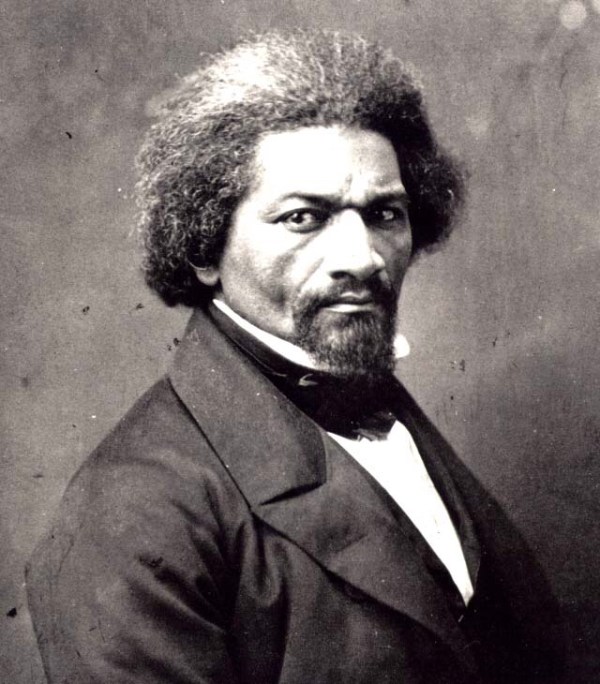
In 1838, a man travelled from Baltimore to New York, and after a short time, settled in New Bedford, Massachusetts. He had imagined life in north to be significantly inferior to that in the south, due to the affluence created by the institution of slavery. To his surprise, it was a flourishing town, where both laborers and merchant class workers shared in the wealth created by industry and trade. He acquired gainful employment and started a family with his newlywed wife. He went on to write an autobiography of his life in the sweltering plantations of south, the moral masquerade in the city of Baltimore and his admirable journey to the north.

The Narrative of Frederick Douglass became one of the most influential writings of the 19th century, and was a spark to a fire that ended the institution of slavery. Douglass could have lived a quiet life in New Bedford, where although racism was not absent, it was minimal compared to abhorrent conditions he had known in the fields of Maryland. But Douglass remembered his brethren still trapped in bondage and was compelled to act on their behalf. Still a slave in 1845, he published his famous work, which propelled him to the forefront of abolitionist thought leadership.

But before Douglass became a leader of the abolitionist movement, he became the leader of his own destiny. He resolved to satisfy his insatiable yearning to breathe free. He taught himself to read and developed a skilled trade. He developed a plan, and executed it in the face of over-whelming odds with life-threating risks.

Through his story, we can see the first step to leadership is self-leadership. If you cannot successfully lead yourself, leading others will not be possible. Secondly, we can see the evidence of thought leadership. The first step in advancing society is to believe in a future that is brighter than the current reality. The words we speak and the thoughts we believe become the lives we lead in the future. And third, we can see how the resolve of an ordinary person, even from the lowliest of circumstances, through their dreams, words and diligence can change the fate of the world.

Douglass’ story of extraordinary resolve is only one example of how everyday people influence the outcomes of our lives. Before institutions are changed, before laws are passed, even before society changes its mind, a thought leader emerges who changes the course of history.

In the absence of quality leadership from our politicians, religious figures, and business people, we must be resolved to develop our own self-leadership. Deciding to lead yourself on a course of self-improvement is the first step to living your life to its fullest potential. If we lead ourselves individually in this manner, we will undoubtedly advance society collectively.

We need the thought leadership which will break the deficiencies of the status quo to move us toward a more perfect union. We need thought leaders who speak truth in the face of opposition, even in the face of the majority, because the thoughts that change the world are rarely those originally held by popular opinion. We need to listen to those who are speaking the truth of our times, with a vision for the future founded upon the knowledge of the past. We need to actively seek out our own errors, and refine our own positions, to draw closer to the evasive, omnipresent truth which brings harmony to our lives.

The world will be no better than the best its leaders can offer. A compelling vision of the future, combined with a sober judgment of our current state is required to move humanity forward. Both true leaders and demagogues have assumed positions of formal authority in the past and present, but those with formal authority have not always, or even usually, produced the most progress. It is the common person arising above their station, who leads in thought and example, which creates the most leadership known to the world.

The leader the world needs to find right now is you, in whatever capacity you’re in, to achieve your fullest, and by example, lead those around you to do the same.

The question remains, where are you going to lead us?

Photo courtesy of PBS.

http://www.pbs.org/wgbh/aia/part4/4h2962.html

Character, Virtue and Spirituality

Aristotle described virtue as the mean between two extremes, but today, we live in an age where the two extremes are just increasingly mean. We have inflicted retribution upon one another, taking an eye for an eye so many times that most of us walk around blind. The ancient philosophers and mystics warned against the perils we face, but we heed their advice no more than the contemporary masses of their own times. We are a people who have fooled ourselves into believing we can have leadership without character, righteousness without virtue, and peace without spirituality.

We need look no farther than last year’s election to prove the foremost. Perpetual dishonesty, habitual marital infidelity, underhanded business practices and cash exchanges with foreign officials are the antithesis of qualities to be sought in a leader. In describing this list, you cannot determine if I am referring to the candidate who won or lost. In some absurd series of unfortunate circumstances, the electorate decided it best to vote for the lesser evil. But the lesser of evils is still evil, and thus, a conscious decision was made to vote in support of evil. 

The foundation of leadership is the ability to lead oneself. Said otherwise, character is the bedrock upon which leadership is built. When we’re looking for a leader, we should look first for those qualities that make for an upright individual. We should look for character strengths like honesty, humility and perspective. It makes no difference what policies a governor supports if their personal qualities lead the people into a state of corruption and moral filth.

However, I am skeptical to believe that those in power have led to our state of corruption and am more inclined to think we ourselves are to blame. Predominantly, this is a Christian society and the church has long been the standard bearer for morality in America. Today’s Christian community wants to claim the righteousness of Jesus Christ, but chooses to live with the virtues of Mel Gibson. 

Mainline denominations are in discord trying to appease opposing points of view and, meanwhile, relegate preaching the Gospel to a secondary status. The non-denominational and evangelical movement gravitates toward a narrow view that claims to take the Bible literally, but upon examination, takes literally only those parts that are convenient for its culturally homogeneous constituents, and performs theological gymnastics anytime a scripture is opposed to the constituency’s prejudice. 

This has created a moral void in our society. It is unclear how virtue ethics can regain footing in a time where the primary religion is already certain of its own righteousness, while those on the outside see the church for what it has let itself become. 

On the other hand, there is a growing number of us who are religiously unaffiliated. Many of these individuals seek a world peace based on rationality and science. They see those who are vocally religious and rightly identify the hypocrisy of their actions. Paradoxically, these people are equally as intolerant of religion in the same way they claim the religious to be intolerant. Nietzsche is the greatest philosopher who claimed God is dead, but he also went mad from his own internal disharmony. 

There is no peace without spirituality. All of the science, knowledge and rationality obtained throughout human history cannot replace the intrinsic, unspeakable peace that is only found through the introspective realizations brought about by the Spirit. If you acquire all the knowledge of the world, but are out of touch with your soul, you will be unable to achieve the peace that rationality tells you is possible. 

We have a problem. We lack character, virtue and spirituality. We need leadership that reflects these qualities. We need to work harder to cultivate these qualities within ourselves. And yet, I remain optimistic about the human condition. For all the troubles we face, there are those among us who have the answers, and if we quiet ourselves long enough to listen to them, I am confident we will continue to progress as a people. 

At the intersection of character, virtue and spirituality lies an inner peace that cannot be taken from you. If you have taken the time to read this to the end, then I am confident that you are person who values strong character, moral virtues and deep spirituality. If so, then I challenge you to look at your own thoughts and actions, and find the places where you can develop your character, expand your virtues and connect with your spirit. One by one, we can become the change we wish to see. 

The Traveler

A traveler walks through wilderness, where few would dare to go,

Unraveling his bewildered thoughts relearning what he knows.

A thousand miles yet to come, a thousand miles past

Though he took little with him, much more now he does have.

On foot or train or riverboat, the means of his long quest

Only explains the what, not why he put himself to test.

The traveler is the only one who knows what’s on his mind.

If Peace is what he searches for, then Peace I pray he finds.

Each city filled with children without shelter while they slept,

Trapped inside the shadow of the valley of their death.

They respirate in toxins to achieve deceiving highs.

Their desperation drowns the Light until it cannot shine.

What will happen to these people, when did they come, where will they go?

Why do we ask the questions that no man can ever know?

Sitting with the homeless was a traveler in disguise.

If Peace is what he searches for, then Peace I pray he finds.

The traveler carried onward to the highest mountains base.

Perspective granted to him by the Himalayas grace.

The air was thin and, as he rose, so hard to catch his breath.

But what was all around him was the one we resurrect.

Unspoken Truth that cannot fade and will not ever die

Bestowed upon a simple man who was just walking by.

As he climbed down the mountain, he reflected on his time,

And Peace will never leave him if he keeps it on his mind.

The traveler still moved forward till he reached the ocean’s shore

And dove into the water where he saw the ocean floor.

He flew amongst the fish and floated by the massive shark

The sound of bubbles rising, looking down into the dark.

What a world he’d never seen and he would never want to leave,

And so he stayed and lived in life a dream that he had dreamed.

But he remembered all of those that he had left behind.

He knew that Peace and Light are lost if we don’t let them shine.

The traveler traveled thousands miles unto the crystal sand. 

And as all travelers do, returned to that which he began.

I did not see him come, but he was sitting in a chair.

I do remember feeling Peace to know that he was there.

This was not the first occurrence here, nor will it be the last.

Some moments cannot be defined by future, present, past.

And as we spoke I knew that we had meetings of the Mind.

If Peace is what we’re working for, then Peace we’re sure to find.

————————

Written about the journey of an old friend. May he be well and happy. 

Truth and Misinformation

If you had to tell someone from a hundred years ago the strangest thing about modern society, what would it be? According to a joke, which is all too true, the strangest thing about modern society is that we hold in our pockets a device that can access all the knowledge from all human history, but use the device to argue with strangers and look at pictures of cats. Although we can access an abundance of wisdom, we more often choose to live in a bubble of ignorance, or worse, false belief. Information is disseminated so quickly that it is impossible to process all of it. As such, we use our filters to decide which information to believe, what to ignore, what to act upon and what to dispute.


The world of information overload is being used to spread falsehood and deceit at an incomprehensible scale. Consistent attacks on traditional media outlets have led people to confuse the slanting of news stories with outright lies. These lies are repeated so often that many people believe them to be true. The ignorant may haphazardly stumble through an unobserved life, but it is the misinformed that truly disturb our ability to achieve harmony.


In Plato’s allegory of the cave, a group of people are chained to the ground staring at the shadows on the wall. One man is freed, who then exits the cave and sees the splendor of the real world. He returns to those still chained to the floor to tell them of this glorious new environment, but they do not believe him. They are convinced that the shadows on the wall are all that exist.


We find ourselves in a time where we have become the people chained to the ground. People who have seen a clearer reality come through and tell us of a better world, but we disregard them because we live the illusion of our shadows. We are convinced our own perception is a clear understanding of things as they are. Our own prejudice clouds our judgement and old mental models preclude the development of brighter paths forward.


In his “Discourse on Method”, Descartes ponders reality, what he can know and what may be an illusion. His famous, “I think, therefore I am.” proclamation may seem fundamental to most of us, but it is indeed a profound starting point for the discernment of truth and knowledge. There is little else you can prove for which there is no reasonable means of refutation or skeptical regress. His well-known statement is the foundation of what he discovers as an irrefutable truth.


The work of Descartes has been refuted and confirmed by minds much more knowledgeable than mine, nor do I seek to debate the existence of the world itself. However, I think his method of questioning everything until you get to the fundamental essence is a lesson we can all learn from. If we are not skeptical about our own observations, cognitions, and precepts about the world, we fall into a trap of arrogance in which we believe our view of the world is the ultimate truth.


The visible universe demonstrates this fact. There was a time when a king asked what the world was made of, to which a sage responded, “everything is made of earth, wind, fire and water.” This understanding persisted for centuries, as on the surface, it is near impossible to refute this statement. But as time moves on, human understanding deepens. Today, we know there are things not made of these elements, and that in fact, these elements themselves are made of other elements. Newton’s laws of motion give way to Einstein’s theory of relativity, so on and so forth. Therefore, while most of us cannot validly refute that everything is made of earth, wind, fire and water, there are some who nevertheless have been able to see further into the real nature of our universe. The old way of thinking is now viewed as a primitive simplification of reality.


We use simplifications almost constantly. Our world is too large and too complex to fully understand its entirety, so our minds have developed shortcuts to provide useful information out of the overwhelming complexity that comprises the real world. Our own observations, experiences, and thoughts merge together to form our own unique representation of reality. While these simplifications and shortcuts are necessary for us to function in an expansive universe, they also give rise to inaccurate bias and prejudice in our interpretation of events.


Acknowledging our view of the world is an incomplete simplification brings into question the certainty of our own beliefs and actions. How do we know that our own prejudice is not clouding our judgment? Have we been reasonably skeptical of the perception of reality our mind has created for us? Should we be so hasty to convince others of our beliefs, rather than first understanding where our beliefs may have led us to a short-sighted conclusion?


In his book “Seven Habits of Highly Effective People”, Steven Covey explains the need for us first to seek to understand before trying to be understood. We too often listen to people only with the intention of crafting our next counterpoint. This is not seeking to understand. Truly evaluating what a person is saying, asking questions to know why they are saying it, getting to know their story and how it influences what is being said, these are the steps in seeking to understand. We do not engage enough in these actions. Instead, we use cookie cutter assumptions to put people into a digestible box, so we don’t have to think too much about the more challenging questions that arise when we seek understanding. Our own bias and prejudice clouds our judgment. We don’t pull the plank out of our own eye before criticizing the speck in our neighbors’. We continue to look at the shadows on the wall and believe they accurately represent reality.


What’s even worse is how little time we spend seeking to understand ourselves. Descartes’ statement of, “I think. Therefore, I am.”, naturally gives rise to a follow up question, “what am I?”, or perhaps more importantly, “what do I want to become?”. We spend so much time absorbing information from the external environment, that we have lost our sense of self-reflection. We’re becoming a mirror image of the world our media sources select for us, rather than becoming the unique, productive, and self-contented individuals we were created to be. By intentionally creating time for self-understanding, we begin to build the foundation to understand others. We start to see the light, or at least begin to understand that we’re looking at shadows.


So, what does this all mean beyond the philosophical nonsense? How does this apply to our lives? Well, personally, I’ve been taking the time over the past several months to get away from the social media scrolls and 24-hour news cycles. I’ve replaced the time reading news columns that will be outdated tomorrow with reading classics that have withstood hundreds, if not thousands of years. I’ve been trying to argue less and listen more. I’ve been taking more time to be silent, more time in prayer and more time in meditation. I’m am happier now than when I started. I’m am quicker to listen, slower to speak, and slower to become angry. I may not be able to always see reality clearly, but I am better at recognizing the times when I’m staring at shadows.


So, the next time you are about to criticize someone, try to make sure you understand them first. Before ruling out the possibility of a course of action, make sure your own bias isn’t clouding your judgment. Before you put someone in the box of your pre-constructed mental models, make sure you’re not staring at a shadow. Take the time to turn around and see the person who that shadow belongs to. In doing so, you see the world a little more clearly, your neighbor a little more compassionately and yourself a little more humbly.

IMG_4428

Are you at peace with yourself?


The kids are screaming, your phone is buzzing, the dog is barking and you’re trying to catch up on the work you should have finished yesterday. You put aside the work, yell at the dog, pick up your phone and intervene just before your three-year-old throws a plastic toy through the television. You check your notifications to find your boss has emailed another request, six people like your status update and that idiot cousin of yours posted another rant on Facebook. You stay up late to get ahead and wake up the next morning behind.

Is this the life you were called to live?

Of course, it isn’t. Technology has increased the speed of information, but for all the luxuries we live with, we find ourselves no closer to finding true meaning than those who lived long ago. We find ourselves with more “friends”, but with fewer relationships. We find ourselves immersed in a sea of knowledge, but are drowning in it because we lack wisdom.

What do you want out of life?

In ancient India, a prince wandered out of the palace for the first time and found suffering. He then went off on his own as he searched for meaning. In imperial Rome, a man wandered into the desert for forty days to struggle with his own inner temptation. Both emerged after a time of self-contemplation and reflection as the two most peaceful figures in history. Jesus and Siddhartha, the Christ and the Buddha, first dealt with their inner struggles before beginning their ministries. They knew that true meaning in life only comes after internal peace is achieved.

The past few months have been a period of highs and lows, personally, professionally, and spiritually. During this season, I find myself in periods of deep peace, as well as utter turmoil. From upheaval at work, to the death of a friend, to the uncertainty of the global political climate, I find myself struggling to remain centered. Modern life does not lend itself well to finding inner peace. Technology has made it easier than ever to communicate with each other, but often the speed of communication turns to distraction. Although we have access to a wealth of information, I question if the way we use this new ability proves fruitful for us as a people. In all honesty, I find myself more connected when I consciously choose to disengage from technology and look for wisdom written by those who spent much of their lives in peaceful self-contemplation.

After leaving his palace and discovering suffering, Siddhartha Gautama went into a period of self-reflection and discovery. After much contemplation, he emerged with what he believed to be the path to enlightenment. Similarly, Jesus went into the desert for forty days into a period of deep prayer before beginning his ministry. Wherever your faith lies, I believe we can all learn a great deal from the actions taken by these two beacons of light. Namely, if we want to change the world, we first must change ourselves. It is my belief that this change is driven by finding the peace that is within you, and actively working to hold onto it in each moment.

That being said, I am terrible at doing this. I find peace in prayer, meditation, on a run, with my wife and children, but then with fickleness, become distracted by the next email, Facebook post or upsetting event. I do not hold onto the peace I have found. As the Apostle Paul said, “I do not understand what I do. For what I want to do, I do not do, but what I hate, I do.” (Romans 7:15). It’s ludicrous how much time we spend doing things we know will not bring peace to our lives.

Interestingly enough, modern psychology is uncovering some reasons why this vicious cycle is a reality. Our brain in a complex organism with as many neurons as there are galaxies in the universe. Various regions contain specialized functions. Some for processing language, some for emotion, others for basic instincts, such as dodging an object coming your way. What science has yet to uncover is the “observer”, or rather, the part of the brain that makes up what you and I experience as a seamless stream of reality. Observations of your brain lead more to a conclusion of a compartmentalized system where the most active brain cell take control of our actions.  Your brain is an organ where a mosaic of rival interests competes for control of your consciousness.

Setting aside any arguments of whether the observer exists (i.e. the soul), neurology explains a lot about why finding peace is such a fickle event in my life. The positive peace I find is overridden by a distraction coming in from other more insidious neurons. Serious meditators identify this as the “wild horse” of your mind. Try meditating by focusing only on your breath for ten minutes. If you’re a beginner, it’s likely that other thoughts come into your mind while you are trying to intentionally focus on one item: breathing.

The practice of intentional meditation strengthens your brains ability to control overactive negative thoughts and emotions. The most peaceful people I have met were very serious about prayer and meditation. By intentionally cultivating a centered state of being, they exercise their minds in the same way athletes exercise their muscles. By doing this, they can call upon a strengthened state of inner peace in times of pain, trial, and tribulation.

What is encouraging for me is that the Apostle Paul, who did the things he hated, was able to take up the spirit of prayer and become a person who was joyful even from the depths of a prison cell. If Paul can find peace in a cell, then we can find peace amid our world of distractions.

We all have issues that keep us distracted from the peace that lies deep within each one of us. Some have deeper pains than others. For all my lack of keeping peace within my heart, I live an easy life, free from the struggles many face. But no matter the depth of your struggle, you too can find peace if you intentionally seek it. It’s scary to look within yourself to find the demons that plague you, but it’s even more frightening to let them keep ahold of your thoughts and actions. When you let go of the lies you tell yourself, which have been reinforced by culture, you can find the peace that always has been in your heart.

So, I would ask you (as well as myself), where do you find peace? Are you intentionally seeking to cultivate peace within yourself, so like an athlete, you have exercised the peace within you? If not, what would you be willing to give up to find your inner peace? If you have found it, how will you hold onto it?

The great leaders of religion have shown us that internal peace is there for those who seek it and are willing to put forth the conscious effort. For all the distractions, the rude customers, the unreasonable bosses, the screaming children, the incompetent facebookers, there is a way to master your instinctive reaction and rise above.

We are all searching for peace in this world. For a long time, I have wanted to be the change that brings peace. But for now, I realize the only way I can bring peace anywhere is to make sure I am at peace with myself.

Get the<a href="http://flickr.com/photo_zoom.gne?id=633285397&amp;size=l"> large  </a> view!

The <b>Church of Peace</b> (German: Friedenskirche) is situated in the Marly Gardens on the Green Fence in the pala...

Photo courtesy of Wolfgang Staudt

http://www.everystockphoto.com/photo.php?imageId=2081364&searchId=823099ad02dfdb27c5c050db1b435e69&npos=2

Blog at WordPress.com.

Up ↑