A better way for politics

Political divisiveness is the most critical issue of our time. The polarization between different political factions has reached a breaking point. It is increasingly difficult to find common ground between opposing viewpoints, not only around a solution to any give issue, but around what issues even exist and the sources of facts upon which to base a decision.

This divisiveness has led to a range of negative consequences, including gridlock in the political process, social unrest, and an erosion of trust in democratic institutions. We must find a way to end political divisiveness and bring people together for the greater good.

One of the most effective ways to end political divisiveness is to promote empathy and understanding between different groups. This means actively seeking out opportunities to engage with those who hold different political views and trying to understand their perspective. By listening to others and considering their point of view, we can begin to see the world through their eyes and develop a deeper understanding of their concerns and motivations. This can lead to greater empathy and a more collaborative approach to problem-solving.

Another important way to end political divisiveness is to encourage open and honest dialogue. This means creating safe spaces where people can express their opinions without fear of being attacked or ridiculed. It also means being willing to listen to and engage with those who hold different views. When we can have constructive conversations about politics, we can begin to break down barriers and find common ground.

Another effective approach to ending political divisiveness is to focus on shared values and priorities. While there may be differences in opinion on specific policy issues, there are often shared values that can serve as a foundation for collaboration. For example, most people value freedom, security, and prosperity, regardless of their political affiliation. By focusing on these shared values and working together to find solutions that promote them, we can bridge political divides and work towards a common goal.

Education is also a powerful tool for ending political divisiveness. By promoting critical thinking and media literacy, we can help people to understand and evaluate different sources of information. This can help to counter the spread of misinformation and conspiracy theories, which often fuel political divisiveness. Additionally, education can promote a greater understanding of the complexities of political issues, which can lead to more informed and nuanced discussions.

Another approach is to encourage political leaders to take a more collaborative and bipartisan approach. This means seeking out opportunities to work across party lines and finding common ground on issues that affect all Americans. When leaders are willing to put aside their differences and work together, they can model the kind of collaboration that is needed to overcome political divisiveness.

Finally, it is important to recognize the role that social media plays in political divisiveness. Social media algorithms often promote content that reinforces our existing beliefs and biases, which can lead to a narrow and polarized perspective on political issues. By being mindful of our social media use and actively seeking out diverse perspectives, we can begin to break down these echo chambers and engage with a wider range of opinions.

Political divisiveness is a major challenge in our world, but we have the collective ability to address it. By promoting empathy and understanding, encouraging open and honest dialogue, focusing on shared values, promoting education, encouraging bipartisan collaboration, and being mindful of social media use, we can begin to bridge political divides and work towards a more collaborative and inclusive society. Ultimately, it is up to all of us to take responsibility for ending political divisiveness and promoting greater unity and understanding.

The Top Ten Ways to Improve Wellbeing in Modern Life

In the fast-paced world of modern society, it can be difficult to maintain a sense of wellbeing. We strive for success in our careers and personal lives while managing our time between social engagements, family commitments, and personal hobbies. It is important to prioritize our mental, emotional, and physical health to live a balanced and fulfilling life. Here are some best practices for wellbeing in modern society:

1. Prioritize self-care

Self-care refers to the actions individuals take to care for their physical, mental, and emotional needs. This includes activities such as getting enough sleep, eating nourishing meals, practicing relaxation techniques, and engaging in exercise. By prioritizing self-care, individuals can better manage stress, reduce anxiety, and improve overall health.

2. Connect with others

Human connection is an essential aspect of wellbeing. In today’s world, technology has made it easy to stay connected with friends and family through social media, texts, and video calls. However, it is important to prioritize face-to-face interactions as well. Spending time with loved ones in-person can improve mood, reduce stress, and foster a sense of belonging.

3. Practice mindfulness

Mindfulness is the practice of being present and fully engaged in the moment. It involves paying attention to thoughts, feelings, and sensations without judgment. Practicing mindfulness can help with stress management, emotional regulation, and cultivating a sense of inner peace.

4. Limit screen time

Technology has revolutionized the way we live but it is important to recognize the impact it can have on wellbeing. The blue light emitted from screens can interfere with sleep patterns and excessive use can lead to feelings of isolation and disconnection. Setting boundaries and limiting screen time can help individuals prioritize other aspects of their lives such as socializing, exercise, and self-care.

5. Engage in physical activity

Exercise not only improves physical health but also has numerous benefits for mental health. Regular physical activity has been found to reduce symptoms of depression and anxiety, improve cognitive function, and boost self-esteem. Incorporating physical activity into daily routines can promote overall health and wellbeing.

6. Practice gratitude

Gratitude is the practice of recognizing and appreciating the good in one’s life. Practicing gratitude can help individuals focus on positive experiences, reduce feelings of negativity, and cultivate a sense of contentment. Daily practices such as journaling or reflecting on what one is grateful for can promote a positive mindset.

7. Set boundaries

Setting boundaries is essential for maintaining wellbeing. Boundaries refer to the guidelines an individual sets for themselves in order to protect their mental, emotional, and physical health. This can include saying no to excessive commitments, limiting exposure to toxic relationships, and prioritizing self-care.

8. Seek professional help

Sometimes, despite one’s best efforts to prioritize wellbeing, individuals may struggle with mental health concerns. Seeking professional help can provide additional support and resources. Therapists, counselors, and other mental health professionals can offer guidance, coping strategies, and treatment options as needed.

9. Cultivate a sense of purpose

Having a sense of purpose can promote overall wellbeing. This involves identifying one’s values and goals and working towards fulfilling them. Individuals who have a strong sense of purpose may experience increased motivation, goal attainment, and a sense of fulfillment.

10. Be kind to oneself

Finally, it is important to be kind to oneself when pursuing wellbeing. Adopting a mindset of self-compassion can reduce self-criticism, increase resilience, and promote a sense of self-worth. Practicing self-compassion involves treating oneself with kindness, recognizing one’s humanity, and acknowledging that setbacks and struggles are a normal part of the human experience.

Prioritizing wellbeing in modern society involves a multifaceted approach. By incorporating these best practices into daily routines, individuals can promote physical, mental, and emotional health, and live more fulfilling lives.

Merry Christmas

A young couple walks ninety miles over four days to deliver an infant of questionable origins in a barn among farm animals. That boy grows up to be a champion of love, hope, joy and peace. His name echos in eternity. For some, he is the Messiah. For others, he is a nuisance. Still others scoff at his miraculous birth and discount his teachings. But putting the mythology aside, Christ’s birth, life and death are miracles in themselves.

The difficult journey of Mary & Joseph would drive most modern couples apart. The “hardships” most of us face in twenty first century America pale in comparison. Making the journey itself is a testament to their love for each other.

The birth of a baby in the middle of a barn, without assistance, without doctors or even a proper midwife, is a miracle. Can you imagine bringing your child into the world with only a donkey to help you in the process? It is unspeakable joy that a boy be brought healthy into the world this way.

After the journey and the delivery, how peaceful it must have been in that stable! Not the type of manufactured peace we get in a modern day spa, but the overwhelming peace of the end of a long journey, a long pregnancy and the safe delivery of a child. In the midst of a barn, Mary & Joseph we’re granted a peace that most of us will never know.

The hope of a new child rested in their arms. Each birth contains endless possibilities. We look forward to watching children grow into more than we could have imagined.

The story of Jesus Christ does not need magic to be miraculous. It is a miracle in its plainness. It is the Gospel with or without a resurrection. It is the story of joy, peace, hope and love for all people.

The world needs the Christmas Story, but not because of the miracles. We need the Christmas Story for its extraordinary plainness. The faith of a couple giving birth to their son in a barn. A boy who grew up to teach kindness to all.

You do not need to believe in mythology to believe in Jesus. His story is one of joy, peace, hope and love. We need this Gospel to be preached into the world today. We need to find peace that the challenges we face are small in comparison to those faced in the past. We need to know hope is proven by the continuous progress of humanity toward a more just world. We need to find joy in our day to day lives. And most importantly, we need to love each other deeply.

The Christmas Story may contain passages of Angels and a Virgin birth. But those aren’t central to it. At its core, it’s a story of a coupe who loved each other enough to whether the journey together. It’s a story of a boy born in a stable. It’s the miracle of birth and life itself. It’s a reminder that joy, peace, hope and love are the meanings of a life well lived.

I hope you have a day full of peace, joy and love. Merry Christmas!

Equally supported: An American Manifesto

There is a sinister belief in American politics that the country is “deeply divided”. This is a false reality perpetuated by polarized traditional and social media outlets to improve their advertising profits. They need you to be afraid of the other side so you keep watching, scrolling, clicking and commenting.

The reality is Americans are not deeply divided, we are equally supportive. That’s why we end up with split control of Congress. That’s why one party has not controlled the Presidency for more than 3 terms since Roosevelt. That’s why so many of us are fed up with political extremism.

We equally support limited government, and the need for government spending on infrastructure, education, and social security. We equally support a future of independent clean energy and the need for affordable gas prices today. We equally support the right to own a gun and the right of government to regulate gun ownership. We equally support women’s reproductive health and the fact that each abortion is a personal tragedy. On almost every political issue, you will find the majority of Americans understand both sides of the argument.

We are also fully support the foundations of our democracy, which are rule of law, burden of proof, and free and fair elections.

Most Americans are not deeply divided. They are understanding, reasonable and responsible citizens. This is why our democracy has lasted for over two centuries, and it is why it will continue to thrive.

Some fear-mongers want you to believe that America is threatened, but this only becomes true if the vast majority of political rationalists allow it to happen. We have seen the results of political extremism. It has failed at the ballot box. It has failed at the Capitol Building on January 6th. And it will continue to fail, because we are not deeply divided.

We are united as people who love our families, who want the best for our children, who are willing to work together and who understand that disagreements do not make us enemies, but rather, make us a stronger society. We are united in the rejection of a political arms race toward the extreme right or left. We are united in wanting to find a better way.

It sure as hell makes a better story to make Republicans the enemies of Democrats. But most Republican and Democratic voters are not enemies. We are neighbors, friends, cousins, sisters and brothers. The next time someone tells you the country is divided, I would encourage you to think about if this division is the world you see in your daily life, or is it a manifestation of the screens that are trying to steal your attention.

Reject the narrative that we are deeply divided. Understand that we are instead equally supportive. And that will make all the difference.

E Pluribus Unum

Be Water

I often find myself resisting, grinding and struggling. I’m a hard charger, set lofty goals and aim to achieve them. But often, I find the harder I try, the more I dig myself into a hole. Like trying to squeeze a liquid, the goal slips through my hand.

Water is literally the source of life on earth. Philosophically, a lot can be learned from it. Water nourishes, supports, hydrates and sustains, yet it is unyielding, relentless and unwavering. It will not stop you from entering, but it will not be stopped by you either.

The tide shapes the coastline. Rivers carve out canyons. The best man made structures waste away due to weather, rot and rust. Water continues on its path. It always finds the quickest way back to the ocean. It doesn’t resist the things in its way. It simply moves around them.

Bruce Lee had a revelation in his own martial arts when he considers the properties of water. He aimed to mold his practice into a fluid art that took what he was given and used it toward his purposes. His philosophy of jeet kune do was simple: Be water.

I needed this reminder as I go through my daily life. I do not need to act forcefully, like a ram butting heads with an opponent. I need be water. Constantly moving toward my goals. Unyielding, but never resisting. Freely flowing through time to carve the path I’m seeking. Not using force, but finding the path of least resistance.

Embrace the journey. Enjoy the cycle of life.

Be water.

Momento Moir

I came across a graveyard overlooking a mountain range on a run through Vermont. The beauty of a blue sky fading into the dark green hillside was a stark contrast to the tombstones most near me. Those mountains will remain long after I lay with the dead.

Vermont

Momento moir” is a stoic reminder of our own mortality. We do not need to fear death, but rather, should be afraid of not living fully. We are too often caught up in trivial matters of the day. Remembering that you have to die is a reminder to focus on what is important.

When people close to death are asked what they would have done differently, they almost universally say spend more time with families and friends, travel more, and to be more adventurous. No one says they wish they spent more time in the office, complained more about the weather, or argued more about politics. Shared experiences with loved ones is what it means to be human. This is where we should spend our time.

We are all mortal. This is a good thing. It is even better to have perspective in the present moment. This empowers you to live your life as if you had the benefit of hindsight. Leave work early. Take you kids to the park. Go see that place you’ve admired. Buy the ticket. Take the ride.

We all get to die. We can all choose to live well. When my days fade from a blue sky into a dark green hillside, I hope I chose to spend those days with the people I care for most.

The End of Productivity

What happens when producing more yields less satisfaction? The rules we have been operating under may no longer apply. Business schools teach maximization, efficiency and optimality, but productivity increases have yielded a negative happiness curve.

Economically, we are not prepared to deal with this. Our system is predicated on endless growth. Our leaders preach it and we are trained to believe it. Produce more and we will be better off. It is quickly becoming a myth in the modern world.

For the first time in history, we have more than enough, everything we need and most things we want. Having more will not help us. Bigger waistlines, bigger debts and bigger commutes show that more is not better. Psychologically, we acknowledging we have enough is critical to our wellbeing.

At the same time, we will need a new economic system to support the new reality of enough. Our economy will not continue to grow forever. It will flatline. And when it does, we should not panic.

We should realize it is the natural result of having enough, and that shared prosperity is the path to a healthy community. We should embrace a future where the growth we seek lies in the growth of communal wellbeing, rather than the growth of an economic bottom line.

The age of productivity is over. We are now in the era of wellbeing.When you realize you have enough, you are free to live and to be. I am thankful to live in these times, to be awake to realize I have enough to live, and enough to meet the challenges of tomorrow.

Focus on the Inputs

I naturally enjoy planning. As a kid, I used to make elaborate drawings of skyscrapers I wanted to build. As an adult, I like to look at different certifications I can get, competitions I could enter and hobbies I could take part in. Execution, however, is a different story. I often struggle following through on my grand plans.

Yesterday, millions of people decided to make a New Year’s resolution. Unfortunately, most of them will give up before February. I used to be one of these people. I would make a resolution, but life would get in the way. Executing the plan seemed too difficult. Results didn’t come fast enough. I would get bored, distracted, discouraged and frustrated.

Then I found a better way to plan.

Most resolutions are results oriented:

“I will to lose twenty pounds.” – “I will to read twenty books” – “I will improve my relationships”

These results oriented resolutions fail because 1) they do not tell you what to actually do and 2) they do not give you a path to daily success.

Successful resolutions focus on the inputs rather than the results. Four years ago, I stumbled across this solution by accident. In an effort to complete my results oriented solution to run a half marathon, I made a second resolution to run three times a week. Better yet, I decided I would run in the mornings on Monday, Wednesday and Friday. This gave me a resolutions I could control and focused on the daily inputs that drive toward a long term objective.

Input oriented resolutions are more likely to be successful, because they prescribe the action you need to take on a daily basis.

“I will eat 2 servings of vegetables at each meal.” – “I will read for thirty minutes every morning” – “I will call my mom every Wednesday at 5p”

Not only do these prescribe the necessary action, but they give you a way to accomplish your resolution today. Every day I got my run in was a victory. The specificity of the resolution allowed me to know exactly what to do and when I was going to do it. Execution was still a struggle, but I had removed several barriers simply in the way I structured the goal.

I ended up completing my half marathon. More importantly, I learned how to succeed at making life-altering resolutions. Focusing on the inputs has allowed me to continue running, and add several other healthy habits to my life over the last four years. As you contemplate your resolution (or contemplate if you should make one), look for the ways you can identify the inputs that will lead you to success.

Change doesn’t come overnight. Execution will be a struggle. But you have the ability to take control of your life; to drive toward the best version of yourself. Making a resolution that focuses on the inputs will start you down the path that leads to success.

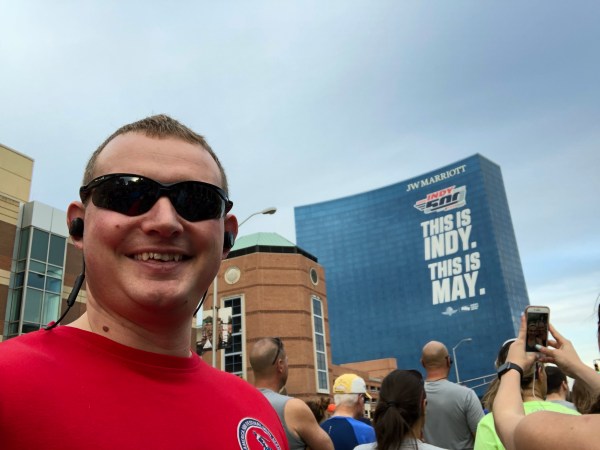
Indy Mini Marathon

For further reading on successful execution, I would recommend the 4 Disciplines of Execution by Chris McChesney, Sean Covey, & Jim Huling. It is business oriented, but can be applied to your personal life.

What keeps you from excellence?

You were born to live a life full of excellence. Each person, regardless of their deficiencies and disposition, has something they can offer the world that will lead to a life of enrichment and add unique value for the rest of us to enjoy. Unfortunately, the majority of us will pass up this opportunity of personal fulfillment and outward success by failing to act on what drives us.

We look at superstars who have soared to the top ranks of their field and wish we were them. We wonder what it took for them to achieve and envy the luck they must have had to get there. But upon closer examination, it becomes apparent everyone has the capacity for greatness within them. The difference between champions and couch potatoes has little to do with talent and everything to do with grit.

Angela Duckworth, a University of Penn professor, defines grit as passion and perseverance. Passion is the starting point. If you’re going to excel, you have to love what you’re doing for the sake of itself. Whether it’s social work or sports or science, what you love to do is the starting point for where your greatness lies. Passion gives you the initial interest, but more is needed to become excellent. The grittier a person is, the more effort they put into their respective field over time. It is this persistence that turns skill into greatness. In combination, the love of an area of expertise combined with continued intentional practice is what creates human excellence (For more on this, read Grit: The power of passion and perseverance, Duckworth, 2016).

Passion is the spark. Persistence is the fire. Excellence lights up the world.

But too many of us trifle our time away either believing we’re not capable or wasting our lives doing things we’re not passionate about. “I can’t” is the biggest lie you’ve ever told yourself.

There are two types of this doubt. This first is saying “I can’t” when you truly believe it. Of course, there are strict physical limitations where “I can’t” may be true, but we use this term of disbelief in far greater circumstances. It may be true that you can’t swim across the Atlantic, but it’s false that you can’t find time to pursue what you’re passionate about.

This leads to the second type, using “I can’t” as an excuse to avoid trying. In doing this, you’re choosing to limit your own potential, because it’s easier to allow inertia to keep you on your present course. Belief in and acknowledgement of your own ability is the first step on your journey to live your best life.

The next step is to stand up and do something about it.

Evolution has caused our bodies and brains to desire repetition. It simplifies life. When we have learned behavior, we don’t have to think as much about what we’re doing. This works both for and against you. I would argue that people who workout everyday and people who shoot heroine are both addicts. It just so happens that one addiction results in a six pack and the other results in a body bag.

You are what your habits have made you.

You have the ability to change them.

Most of us don’t have habits that will kill us (at least immediately), but have the more mischievous, time-sucking, life draining habits of mediocrity. These are things you do everyday that add no lasting value to your life. It’s the job you hate. It’s the event you attend only because you feel obligated to. It’s binge-watching Netflix. It’s your Facebook newsfeed. These activities are keeping you away from what you’re passionate about. They’re taking your time away from perseverant, intentional development of the passion which internally gives purpose to your being. And over time, this is what separates the average person from the person who excels.

People who make a significant impact have an unwavering resolve to improve themselves, particularly in the areas they are passionate about. They purposefully remove the distractions.

We waste so much time distracting ourselves, wishing we had something different, or complaining about how someone else is holding us back. If we transformed this time into productive effort in an area we love, we would not only transform our own lives into the lives we desire most, we would also transform the world into a beacon of prosperity and abundance.

We don’t all have the same skills. We all didn’t start with the same resources. But what creates the biggest difference is what we believe about ourselves. In case you’ve never been told before, you have a unique ability to add greatness to the world that no one else can offer.

Pessimists will tell me I’m wrong; that everyone won’t be excellent. While this may be true, it’s not because they can’t be. It’s because they won’t spend the time aggressively pursuing what they love. They won’t persevere though enough early mornings, late nights, road blocks, naysayers and failures that are required to become excellent. Most people will give up because they don’t believe in themselves.

But the general mediocrity of humanity shouldn’t matter to YOU, because what most people do is irrelevant to what you choose to do with your life.

You can believe in yourself. You can discover what your passion is. You can persevere through the challenges you encounter and become excellent in the area you love. And in doing this, you will create the life you want to live, a life of excitement and fulfillment, and at the same time, improve the lives of everyone you encounter.

Arguments of Identity

For most of my life I have been wrong. In fact, I am less certain now than at any prior point in my life that I know anything at all. This is not out of a lack of effort. Several years ago, I set out to expand my horizons by reading the Top 100 books of all time. At this point, I have read nearly half of them. As I have learned from the great writers of history, the more I have come to realize the vast extent of what I do not know.

This perspective is starkly different from the absolutism experienced in today’s world. As a people, we have become certain of so many ideas. We have become Internet experts on topics ranging from economics to ecology. We are so convinced of our expertise that we are willing to berate and belittle others who hold opposing points of view. Our opponents, being equally convicted of their beliefs, return they volley of vitriol with an escalating sense of fervency.

The hardest lesson I have learned is these arguments cannot be won by the presentation of facts. The logical form of persuasion is the weakest one. Fundamentally, these arguments are not based on disagreement over factual evidence. They are grounded in the perception of divergent identity. Presenting facts that undermine a person’s sense of self creates a cognitive dissonance that is likely to backfire. Such is the reason “fake news” has caught on like wildfire. It allows people to discount anything that opposes their core beliefs as falsehood.

So, how do you win an argument without using facts? I have struggled to answer this over the past year and have finally arrived at an answer. You don’t.

Frankly, I have been asking the wrong question the whole time. You cannot win an argument without using facts. You cannot use facts to win an argument based on identity. Therefore, arguments based on identity are unwinnable and attempts to win such arguments are futile.

Rather than asking how I can WIN, I should have been asking how can I COMPREHEND? How can I see the good intentions of the person I disagree with? How can I understand the life they live? What are the principles we both believe in? What are the deeper beliefs that have brought on this instance of disagreement?

The goal of this is not to change the other person, but to change myself. In doing so, I transform from the expert into the learner. I realize that while my facts have been right, my approach has been wrong. I switch from crafting an argument to listening for similarity. I begin to have compassion for those who disagree and begin to comprehend that my identity can coexist with theirs. I may never convince another soul of the facts I know to be true, but my soul will be uplifted by understanding the good intentions from which disagreements are born.

blue body of water with orange thunder
Photo by Johannes Plenio on Pexels.com

Blog at WordPress.com.

Up ↑